Mobile Home Metal Roof-Over Installation Pensacola
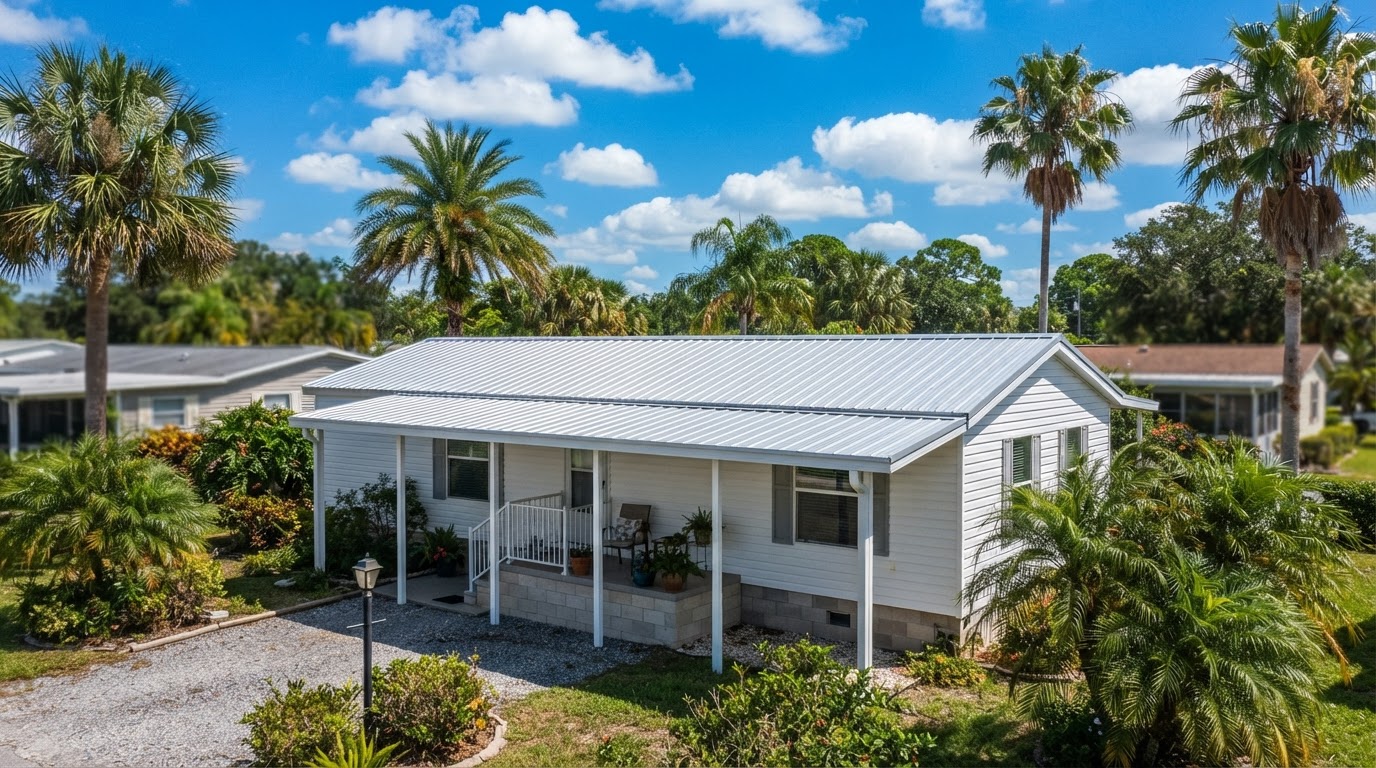
Manufactured and mobile homes across Pensacola and Escambia County face the same Gulf Coast wind, rain, and sun as site-built houses, but with different roof structures that require a property-specific evaluation. A mobile home metal roof-over installs a lightweight metal system above an aging original roof to stop recurring leaks, cover rusted panels, and add a wind-resistant layer without removing the existing roofing. Because manufactured homes vary widely in framing, pitch, and substrate, there is no single roof-over method that fits every unit—each one is evaluated on its own conditions.
A mobile home metal roof-over is a roofing solution that installs a new metal system above an existing manufactured-home roof to stop leaks, cover deterioration, and improve wind and weather resistance. Because manufactured homes have distinct framing, roof pitches, and substrate materials compared to site-built houses, a roof-over requires a property-specific evaluation of the existing roof type, structure, deck condition, and ventilation before the right metal system and attachment method can be determined.
Common Mobile Home Roof Problems in Pensacola
Manufactured-home roofing in the Pensacola climate ages in predictable ways. Decades of Florida sun, Gulf humidity, and storm exposure take a toll on the original roof whether it is metal, membrane, or a coated system. Recognizing these problems early is what separates a planned roof-over from an emergency tarp after the next named system.
- Aging metal roofing with surface rust and red oxide bleeding at seams and fasteners
- Membrane deterioration—cracking, splitting, or shrinkage on rubber and coating systems
- Recurring leaks at seams, transitions, and around vents and other penetrations
- Fastener problems—screws backing out and neoprene washers cracking under UV
- Rust along panel edges and laps where salt air and moisture concentrate
- Seam separation where panels meet and water finds a path beneath
- Ponding water on low-slope sections where drainage is insufficient, where applicable
- Flashing failures at roof edges, vents, and wall intersections
- Vent penetrations that leak as old boots and sealants dry and crack
- Storm damage—lifted panels, torn membranes, or debris impacts after high winds
We do not assume all mobile homes share the same roof structure. Some have metal panel roofs, others rubber or modified-bitumen membranes, and others coated systems over a wood or metal deck. The existing roof type drives the entire roof-over approach, which is why an on-roof inspection is the first step.
Metal Roof-Over Options for Manufactured Homes
The right roof-over approach depends on what is already on the home. A metal panel roof, a membrane, and a coated deck each interact differently with a new metal system. We evaluate the existing conditions and then select an approach that the structure can support and that meets local requirements and the manufacturer's system specifications.
- Existing roof type—metal panels, membrane, or coated systems each dictate a different overlay method
- Roof pitch—low-slope and steeper profiles change panel selection and drainage requirements
- Framing—the manufactured-home roof structure must support the additional metal system
- Deck or substrate condition—a sound substrate is required whether overlaying or fully replacing
- Ventilation—adequate airflow must be preserved or improved beneath the new system
- Local requirements—Escambia and Santa Rosa County permitting and inspection rules apply
- Manufacturer and system requirements—the chosen metal system must be installed per its approved method
There is an important distinction between a roof-over and a full replacement. A roof-over installs a new metal system above the existing roofing, which can reduce labor and disposal when the original roof is sound enough to remain. A full replacement removes the existing roofing down to the substrate and installs the new system directly, which is necessary when the original roof is too deteriorated to overlay. The choice is made after evaluating the structure, not assumed in advance.
Wind, Rain & Heat Considerations for Mobile Home Roofing
Manufactured homes can be especially vulnerable to Gulf Coast weather because of their lighter framing and, in many cases, lower roof pitch. A metal roof-over for a Pensacola mobile home must be engineered for the specific wind exposure, drainage, and heat load of the site—not simply laid down and screwed off. The details below are what separate a wind-ready overlay from a temporary cover.
- Pensacola wind exposure—attachment engineered for uplift on a lighter manufactured-home structure
- Heavy rain—panel laps and drainage paths sized for Gulf downpour volumes
- Gulf humidity—underlayment and ventilation that prevent condensation beneath the new metal
- Florida sun—reflective metal and coatings that reduce heat gain on a thinly insulated roof
- Edge uplift—eaves and rakes detailed to resist wind getting beneath the panels
- Flashing—transitions, vents, and edges sealed to channel water away from the interior
- Attachment—fastener pattern and method matched to the existing structure and the panel system
- Ventilation—airflow preserved or improved to manage attic and cavity heat and moisture
No roofing system can be described as hurricane-proof. A well-engineered metal roof-over improves wind and water resistance, but resilience comes from the combined assembly—proper attachment, underlayment, flashing, and maintenance—not from the metal alone. We describe performance in engineering terms, never as a guarantee.
Mobile Home Roof Evaluation & Installation Process
Because every manufactured home is different, the process begins with identifying exactly what is on the roof and what is beneath it. Only then can we recommend overlay versus replacement and select the appropriate metal system. This is the sequence we follow for a Pensacola mobile home roof-over project.
- 1Identify the existing roofing system—metal panels, membrane, or coated deck
- 2Inspect for damage and leaks—map rust, seam failures, fastener issues, and active water entry
- 3Evaluate roof structure and substrate—verify framing, pitch, and deck condition can support the overlay
- 4Determine the overlay or replacement path—decide roof-over versus full removal based on the inspection
- 5Select the appropriate metal system—match panel profile, gauge, and coating to the structure and wind zone
- 6Address flashing and ventilation—detail edges, vents, and airflow for the new assembly
- 7Install and review the system—complete the roof-over and walk through the finished work
Connected services and resources
Maintenance & Longevity After a Mobile Home Roof-Over
A metal roof-over dramatically improves the weather performance of an aging manufactured-home roof, but it is not a fit-and-forget solution. The systems that perform best over decades in the Pensacola climate are the ones that receive the small amount of attention that keeps a minor issue from becoming a major leak. The maintenance considerations below apply to most mobile home metal roof-overs.
- Periodic inspection of exposed fasteners and washers for UV and salt degradation
- Checking seams and laps after major storms for wind or debris damage
- Keeping edges, vents, and drainage paths clear of debris
- Monitoring flashing at penetrations and transitions for sealant integrity
- Addressing small rust spots early before they spread across a panel
- Verifying ventilation remains unobstructed to prevent condensation
When a section is damaged rather than the whole roof, a targeted repair may be the right move instead of a complete re-roof. We diagnose whether a leak is isolated to a fastener, seam, or penetration—or whether the underlying system has reached the point where another roof-over or replacement is the responsible path.
Frequently Asked Questions
Need a Metal Roof-Over for Your Pensacola Mobile Home?
Contact Pensacola Metal & Shingle Roofing Contractors for a detailed written estimate across Pensacola, Escambia County, and Santa Rosa County.
Request Your Roofing Estimate
Direct consultation for Pensacola & Escambia County residential and coastal properties.