Hurricane & Storm Roof Damage Repair Pensacola
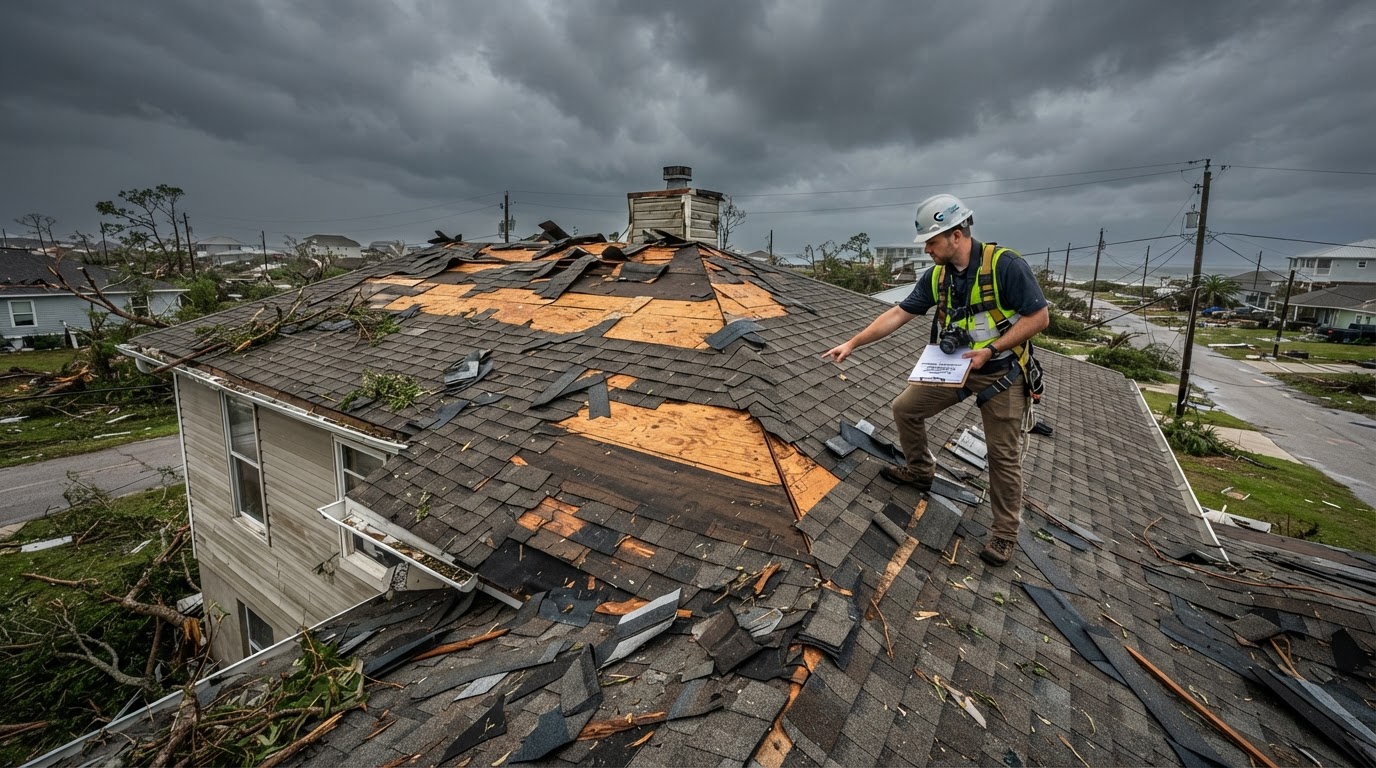
After a hurricane or major storm, the roof is usually where the damage concentrates. Missing shingles, lifted tabs, loose metal panels, failed fasteners, damaged flashing, and debris impact all create paths for water to enter. We inspect, repair, and replace storm-damaged roofing across Pensacola, Escambia County, Santa Rosa County, and the western Florida Panhandle—tracing every leak to its source before any repair is made.
Common storm-related roof problems include missing shingles, lifted shingles, metal panel damage, fastener failure, flashing damage, ridge damage, debris impact, roof leaks, and water intrusion. After a major storm, the roof should be inspected even if no damage is visible from the ground, because some storm damage—creased shingles, loosened fasteners, hairline flashing gaps—leaks only under specific conditions and worsens with the next storm. Documenting damage while it is fresh supports any insurance process.
If There Is a Life-Safety Hazard
If there are downed electrical lines, structural collapse, fire, gas smell, or immediate life-safety hazards, stay clear of the building and contact the appropriate emergency utility or public-safety service before approaching the roof. Do not climb onto a wet, storm-damaged, or structurally compromised roof. Personal safety comes before any roof inspection or repair.
Once the immediate safety situation is handled and it is safe to assess the property, the roof is the next priority. Storm damage that looks minor from the ground can be the start of a leak that appears at the next rain, so a professional inspection after a significant storm is the safest way to understand what the roof actually needs.
Common Hurricane & Storm Roof Damage
Hurricanes and tropical storms damage roofs in recognizable patterns, and the damage differs by roofing system. Asphalt shingles lift, crease, and tear away. Metal panels loosen at fasteners and seams. Flashing pulls away at penetrations and transitions. And the roof system beneath—decking, underlayment, soffit, fascia—can be compromised even when the surface looks intact. A thorough storm inspection checks all of it.
Asphalt Shingles
Missing shingles, lifted tabs, creased shingles folded back at the fastener line, granule loss from impact, and ridge-cap damage along the roof peak—the most exposed shingle areas.
Shingle Roof RepairMissing & Lifted ShinglesMetal Roofing
Loose or bent panels, fastener damage from wind vibration, seam issues where panels have separated, and flashing damage at penetrations and edges. Metal storm damage often traces to fasteners and flashing.
Metal Roof RepairMetal Roof Screw & Fastener ReplacementRoof System
Deck damage from impact or water, exposed underlayment where shingles are missing, soffit and fascia damage at the roof edge, penetration leaks at vents and skylights, and tree or debris impact.
Roof Deck & Plywood ReplacementUnderlayment ReplacementSome storm damage is subtle and may not immediately produce an interior leak. A creased shingle that still sits flat, a loosened fastener, or a hairline flashing gap can hold up in calm conditions and fail only under the next wind-driven rain. A professional inspection finds this damage while it is still repairable.
What to Do After a Major Storm
The hours and days after a storm matter. The priority is safety, protecting the interior, and documenting damage—not climbing onto a wet or storm-damaged roof. The sequence below keeps homeowners safe while preserving the evidence and access needed for repair and any insurance process.
- 1Prioritize personal safety—stay off wet, damaged, or storm-affected roofs and watch for downed lines
- 2Stay off damaged or wet roofs—do not climb up to inspect storm damage yourself
- 3Photograph visible damage from safe locations—the ground, a ladder at the eave, or a safe vantage point
- 4Protect interior belongings—move furniture and valuables away from active leaks and cover what cannot be moved
- 5Arrange emergency tarping when needed—temporary protection for exposed or actively leaking roof areas
- 6Request a roof inspection—have storm damage diagnosed and documented by a professional
- 7Document repair and replacement recommendations—keep the written scope for decisions and insurance
- 8Keep paperwork and photographs organized—save estimates, inspection reports, and claim documents together
We do not encourage DIY roof access after a storm. A wet roof is a fall hazard, storm damage can hide weakened decking, and some damage is not safe to assess from the roof surface. Professional inspection and emergency tarping are the safer path during and immediately after a storm.
Immediate storm recovery resources
Repair vs Partial Reroof vs Complete Replacement
Storm damage does not automatically mean full roof replacement. Most storm damage is localized—missing shingles on one slope, one damaged flashing transition, a few loosened panels—and can be repaired or addressed with a partial reroof. Full replacement fits when the damage is broad, the roof was already near end of life, or isolated repair is no longer practical. The right scope follows an inspection, not an assumption.
| Path | When It Fits |
|---|---|
| Localized repair | Missing materials or isolated damaged components on an otherwise sound roof |
| Partial reroof | A distinct damaged roof section where the rest of the roof is technically sound |
| Full replacement | Broad system damage, a roof at end of life, or isolated repair no longer practical |
For shingle roofs that do need replacement after storm damage, the project is an opportunity to compare options—a new shingle system, or a shingle-to-metal conversion that replaces the damaged shingles with a metal roofing system. The decision depends on the roof's condition, the owner's goals, and the scope of the storm damage.
Pensacola Hurricane Roofing Resource Hub
This page is the hub for Pensacola storm and hurricane roofing. The resources below cover the specific situations homeowners face after a storm—emergency tarping, wind-damaged shingles, converting a damaged shingle roof to metal, documenting damage for insurance, and the Florida rules that affect storm repairs. Each connects to a dedicated page as it is built.
Emergency Roof Tarping
Temporary weather protection for exposed or actively leaking roof areas after a storm.
Emergency Roof Tarping PensacolaMissing Shingles & Lifted Edges
Wind-damaged shingles—lifted tabs, creased shingles, missing ridge caps—and when repair vs replacement fits.
Missing & Lifted Shingles After High WindsStorm-Damaged Shingle to Metal
Using storm replacement as an opportunity to convert a damaged shingle roof to a metal system.
Replacing a Storm-Damaged Shingle Roof With MetalMetal Roof Hurricane Wind Ratings
How metal roof wind ratings work and what the numbers mean for Gulf Coast exposure.
Metal Roof Hurricane Wind Ratings ExplainedRepairing a Metal Roof After Hurricane Damage
System-specific metal roof repair after storm damage—seams, fasteners, panels, and flashing.
Metal Roof Hurricane Damage RepairMetal Roof RepairStorm Damage Roof Inspection
What a professional post-storm roof inspection reviews and what to expect from the process.
Storm Damage Roof InspectionRoof InspectionsDocumenting Roof Damage for Insurance
How to photograph and document roof damage to support an insurance claim after a storm.
Documenting Roof Damage for Your Insurance ClaimStorm Chasers & Unlicensed Roofers
How to spot transient storm-chasing contractors and verify a Florida roofing contractor.
How to Spot Storm Chasers & Unlicensed RoofersRoof Leak After a Hurricane
The first 48 hours after discovering a post-hurricane roof leak and what to prioritize.
Roof Leak After a Hurricane: First 48 HoursRoof Leak RepairPensacola Roofs Since Hurricane Sally
What has changed in Pensacola roofing practices and codes since Hurricane Sally.
Pensacola Roofs Since Hurricane Sally: What's ChangedWind-Borne Debris Zones & Roof Code
Escambia and Santa Rosa wind-borne debris zones and how they affect roof code requirements.
Wind-Borne Debris Zones & Roof CodeFlorida's 25% Roof Rule
When partial storm damage triggers a full code-compliant roof replacement under Florida's 25% rule.
Partial Storm Damage & Florida's 25% Roof RuleHurricane Roof Prep Checklist
A homeowner checklist for preparing a Pensacola roof before the next hurricane season.
Hurricane Roof Prep Checklist for Pensacola HomesFrequently Asked Questions
Storm Damage? Let's Inspect the Roof in Pensacola.
Contact Pensacola Metal & Shingle Roofing Contractors for a detailed written estimate across Pensacola, Escambia County, and Santa Rosa County.
Request Your Roofing Estimate
Direct consultation for Pensacola & Escambia County residential and coastal properties.