Metal Roof Installation & Replacement Pensacola
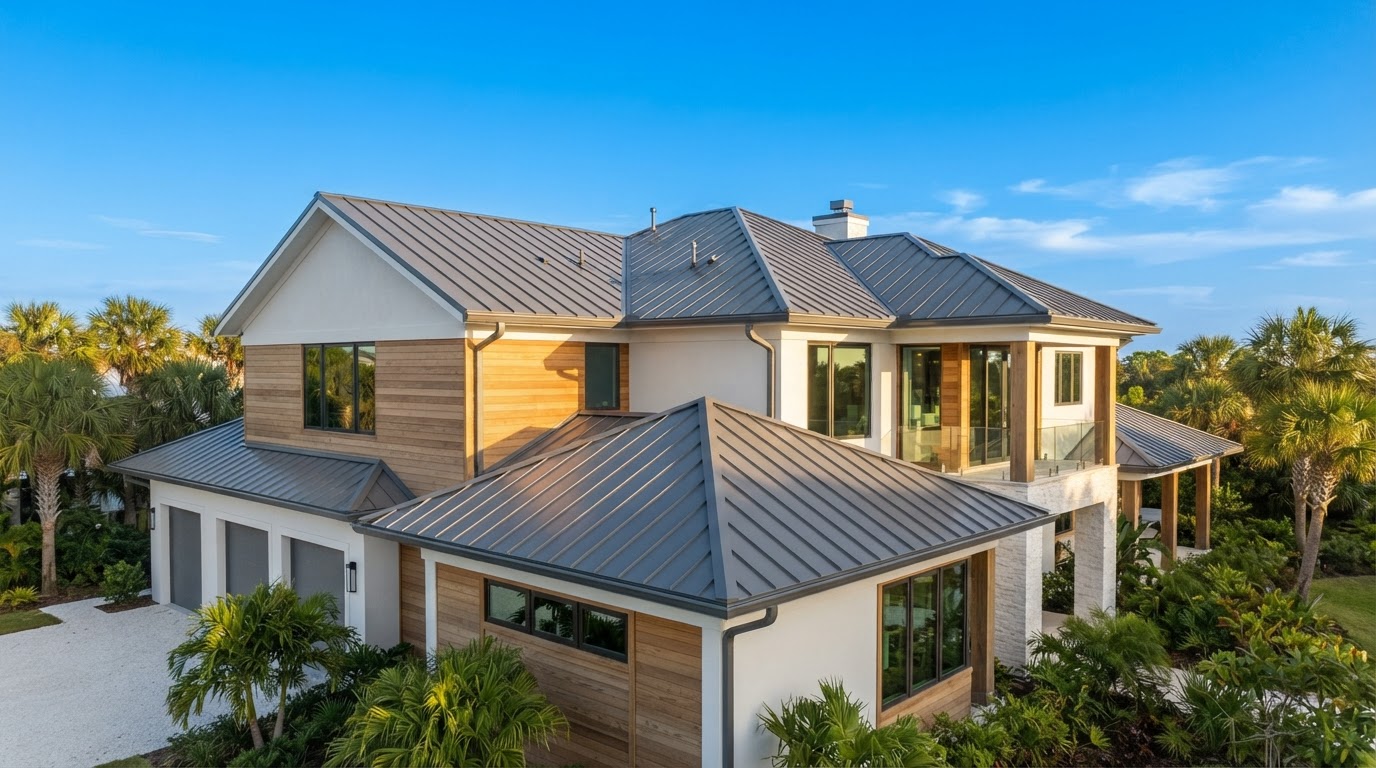
Pensacola Metal & Shingle Roofing Contractors installs and replaces metal roofing systems engineered for the western Florida Panhandle. From a full metal reroof over an aging shingle deck to a first-time metal installation on new construction, our work pairs heavy-gauge Galvalume and aluminum panels with high-temp underlayment, code-compliant deck fastening, and detailed flashing. We serve residential properties across Pensacola and Escambia County, with selected light-commercial and agricultural applications in Cantonment, Beulah, and the surrounding rural corridors. Every metal roof is specified to meet the wind, rain, and salt-air realities of Gulf Coast exposure rather than a generic inland template.
When replacing a roof with metal in Pensacola, homeowners should evaluate four things: the panel profile and fastener system (concealed versus exposed), the metal gauge and substrate (Galvalume, painted steel, or aluminum), the underlayment and deck preparation required by the Florida Building Code, and how the assembly handles wind-driven rain and salt air near the coast. A properly specified metal roof can outlast asphalt by decades, but the right choice depends on roof geometry, proximity to saltwater, budget, and whether the existing deck and shingle layers support a roof-over or require a full tear-off.
Metal Roofing Options for Pensacola Homes
Metal roofing is not a single product—it is a family of panel profiles, each with a different fastening method, appearance, maintenance profile, and price point. The right metal roof for a waterfront home on Pensacola Beach is rarely the same specification that suits an inland pole barn in Cantonment. Below is an overview of the five core systems we install, each linked to its dedicated page for deeper detail.
Standing Seam Metal Roofing
Concealed-fastener panels with raised interlocking seams. The lowest-maintenance and highest-wind option, favored for modern and waterfront homes.
Explore Standing Seam5V Crimp Metal Roofing
The classic Florida exposed-fastener profile with two inverted V-crimps per panel edge. Authentic Old Florida aesthetic at a more accessible price point.
Explore 5V CrimpExposed Fastener / R-Panel
Corrugated ribbed panels for barns, pole barns, garages, and light-commercial buildings where economy and coverage speed matter most.
Explore R-PanelStone-Coated Steel Roofing
Steel panels armored with ceramic stone granules in tile, shake, or shingle profiles—metal performance with a traditional architectural look.
Explore Stone-Coated SteelMetal Shingles
Individual interlocking metal shingles with slate and shake-inspired textures for homeowners who want metal durability without a long-panel look.
Explore Metal ShinglesBudget positioning varies meaningfully across these systems. Exposed-fastener profiles such as 5V crimp and R-panel generally sit at the more accessible end of the market, while concealed-fastener standing seam and stone-coated steel carry a premium for their lower long-term maintenance and higher wind performance. We provide exact figures only in a written estimate after inspecting your roof geometry, access, and substrate, because installed cost depends on factors no online guide can capture accurately.
When to Replace Your Current Roof in Pensacola
Many Pensacola homeowners reach out after a storm, but the decision to replace is usually driven by a pattern of warning signs that develop over years of Gulf Coast heat, humidity, and wind. Recognizing these signals early lets you plan a replacement on your own timeline instead of under emergency pressure.
- Recurring leaks in the same valleys, pipe penetrations, or chimney flashing after repeated repairs
- Visible corrosion or red oxide bleeding from exposed fasteners and panel edges on an aging metal roof
- Fastener deterioration—neoprene washers cracking, screws backing out, or rubber gaskets UV-degraded
- Storm damage: lifted shingle tabs, creased panels, missing ridge caps, or torn underlayment after a named system
- Aging asphalt shingles with widespread granule loss, curling edges, or bald fiberglass patches
- Spongy or soft roof deck indicating moisture-damaged plywood beneath the surface
- Insurance-driven roof concerns—an insurer requiring replacement before renewal or citing roof age
- Repairs becoming uneconomical when patch costs approach a meaningful fraction of a full replacement
Once replacement is on the table, two paths often come up. A shingle-to-metal conversion replaces failing asphalt with a long-life metal system—frequently a smart move for homes already facing repeated shingle storm losses. A metal roof-over, where code and deck condition allow, installs metal over a single sound layer of shingles to avoid tear-off costs. Neither is automatically right for every property; both require a professional deck inspection before permitting.
Related replacement pathways
Metal Roofing Built for Pensacola's Gulf Coast Conditions
A metal roof specification that performs well inland can fall short along the western Florida Panhandle. Pensacola homes face a combination that inland roofs rarely see together: sustained tropical gale winds, wind-driven rain that travels horizontally beneath flashings, relentless UV and heat, high humidity, and—nearer the coast—airborne salt that attacks ferrous metal. The details that determine long-term performance are not the panel color; they are the substrate, the coating, the fastening system, and the underlayment.
- High wind: panel gauge, clip spacing, and edge fastening engineered for uplift, not just appearance
- Wind-driven rain: sealed seams, proper side laps, and end-lap detailing that resist capillary water
- Salt exposure: Galvalume, aluminum, and Kynar 500 / PVDF coatings selected by proximity to open water
- Humidity: underlayment choice and ventilation that prevent hidden condensation on the deck
- UV exposure: high-performance paint systems that resist chalking and coastal fade over decades
- Fastener selection: marine-grade screws and gaskets matched to the panel and environment
- Flashing: step, counter, and edge flashing detailed to channel water away from penetrations
- Underlayment: synthetic and self-adhering peel-and-stick barriers as a secondary water defense
- Ventilation: ridge and soffit balance to relieve attic heat and moisture load
- Panel coating: factory-applied finishes that hold color and resist salt-edge creep
- Roof deck preparation: re-nailing to current code and verifying sheathing integrity before metal goes down
No roofing system can be described as hurricane-proof. Modern engineered metal roofs offer exceptional wind resistance, but resilience comes from the combined assembly—code-compliant deck fastening, secondary water barriers, proper flashing, and ongoing maintenance—not from any single panel. We describe performance in engineering terms, not guarantees.
The Metal Roof Installation & Replacement Process
A metal roof is only as reliable as the assembly beneath it. Our process is built so that every layer—the deck, the underlayment, the flashing, and the panels—is verified before the next is applied. This is the sequence we follow for a typical Pensacola metal roof installation or replacement, adjusted to your specific property and the governing jurisdiction.
- 1Roof evaluation — on-site inspection of decking, flashing, ventilation, and existing material condition
- 2Material and system selection — match panel profile, gauge, substrate, and coating to your wind zone and budget
- 3Scope and estimate — written itemized scope specifying materials, underlayment, flashing, permits, and labor
- 4Existing roof preparation or removal — tear-off where required, or engineered preparation for a roof-over
- 5Deck and underlayment preparation — re-nail sheathing to code and install synthetic or peel-and-stick barriers
- 6Metal roof installation — panels, clips, and fasteners set to manufacturer and wind-zone specifications
- 7Flashing, ridge, trim, and ventilation — penetrations, valleys, edges, and ridge detailing completed weather-tight
- 8Final review — site cleanup, visual inspection, and handoff of documentation for insurance and permits
Frequently Asked Questions
Ready to Replace or Install a Metal Roof in Pensacola?
Contact Pensacola Metal & Shingle Roofing Contractors for a detailed written estimate across Pensacola, Escambia County, and Santa Rosa County.
Request Your Roofing Estimate
Direct consultation for Pensacola & Escambia County residential and coastal properties.