Ridge Cap & Hip Shingle Repair Pensacola
Ridge and hip shingles protect the most exposed lines on a roof—the peaks and angled intersections that take the full force of Pensacola's wind. When ridge caps lift, crack, or blow off, the roof's highest and most vulnerable points are exposed to water intrusion. We repair and replace ridge cap and hip shingles across Pensacola and Escambia County, addressing wind damage and aging on the roof lines that fail first in storms.
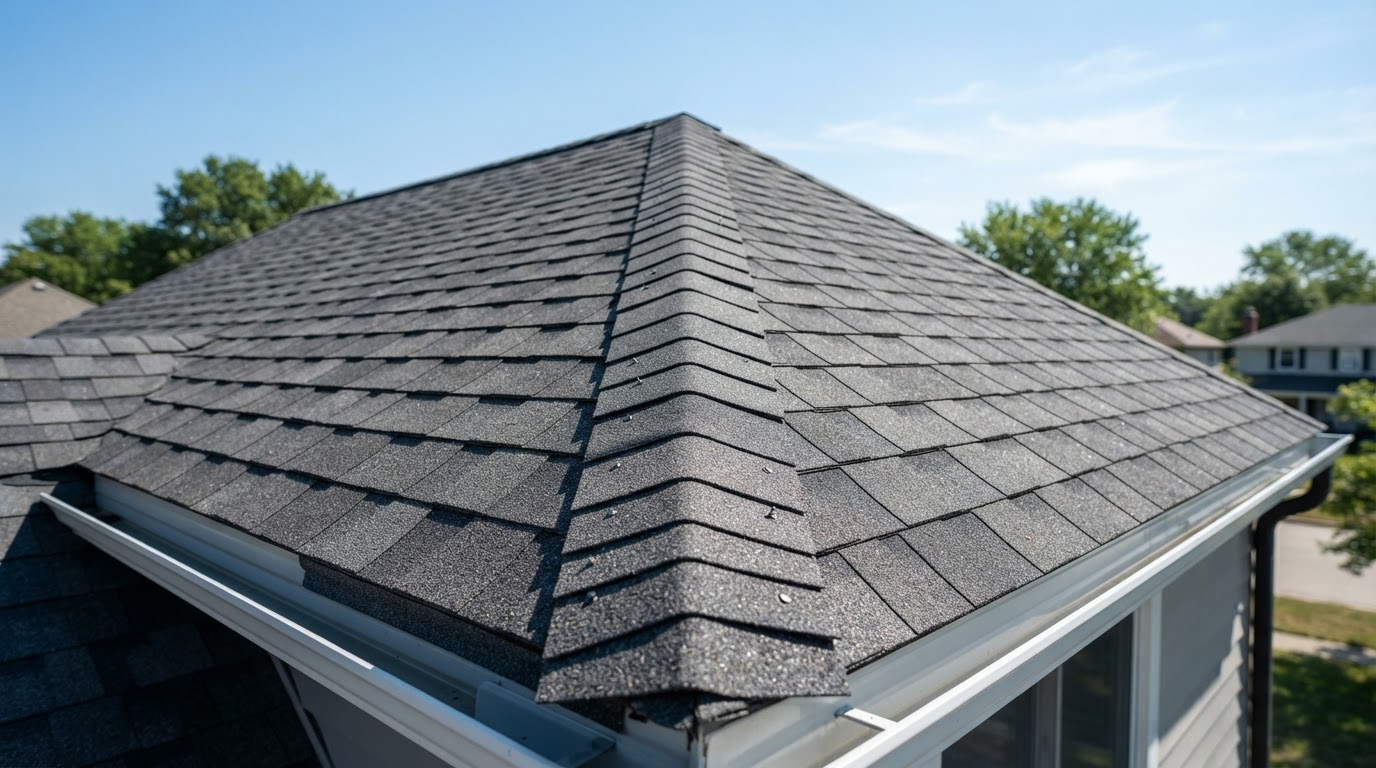
Ridge cap and hip shingle repair fixes damage to the shingles covering the roof's peaks and angled hips. These areas are the most wind-exposed on a roof, so ridge and hip shingles are often the first to lift, crack, or blow off during high winds. Repair may involve replacing individual damaged caps or, when damage is widespread, replacing the full ridge or hip run. The repair also considers whether ridge ventilation sits beneath the caps and needs evaluation at the same time.
What Ridge Caps & Hip Shingles Do
Ridge caps and hip shingles cover the highest and most visible lines on a roof. The ridge is the horizontal peak where two roof planes meet at the top; the hips are the angled lines where two roof planes meet sloping downward. Both are where water sheds from two directions and where wind hits first, so the shingles covering them must shed water and resist uplift at the same time.
- Roof peak protection—covering the horizontal ridge where two roof planes meet at the top
- Hip protection—covering the angled lines where roof planes meet sloping downward
- Water shedding—directing rainwater away from the intersection and down the roof planes
- Finished roof appearance—giving the ridge and hips a clean, completed look
- Interaction with ridge ventilation—where ridge vent components sit beneath the ridge caps
It is important to distinguish between two different components that both sit at the ridge. Decorative or cover ridge caps are the shingles that cap the peak and shed water. Ridge vent components, where present, are the ventilation channels that sit beneath the caps and allow attic air to exhaust. A ridge repair may involve one or both, and the presence of a ridge vent changes how the caps are installed and repaired.
Common Ridge & Hip Damage
Because ridges and hips are the most exposed lines on a roof, they show damage before the field of the roof does. The same wind that leaves the middle of the roof untouched can lift, crease, or tear ridge and hip shingles. Recognizing the common damage patterns helps explain why ridge repair is so frequent after Pensacola wind events.
- Missing caps—ridge or hip shingles blown off entirely during high winds
- Lifted shingles—caps lifted by wind that may re-seal or may need replacement
- Cracking—ridge caps dried and split by UV and thermal cycling
- Creasing—caps folded back at the crease line and weakened by wind
- Exposed fasteners—fasteners visible where caps have shifted or lifted
- Failed seal strips—the adhesive seal that holds caps flat losing its grip
- Storm damage—wind, debris, and impact damage concentrated on the exposed lines
- Aging—ridge and hip shingles drying and deteriorating faster than the field
- Improper fastening—caps installed with too few or incorrectly placed fasteners
Why High Winds Target Ridges & Hips
Wind does not affect a roof evenly. The highest and most exposed lines—the ridges and hips—experience the greatest wind pressure, because they sit at the top of the roof where wind speed is highest and where the roof's shape creates uplift forces. This is why ridge and hip shingles fail first in a storm while the field of the roof may look untouched. On the Gulf Coast, where tropical storms and hurricanes generate sustained high winds, ridges and hips are the front line of roof damage.
- Elevated exposure—ridges and hips sit highest, where wind speed is greatest
- Wind pressure—uplift forces concentrate at the roof's peaks and edges
- Roof edges—the perimeter and ridge zones that building codes treat as high-stress areas
- Peak areas—the horizontal and angled lines where two roof planes meet
- Tropical storms—sustained winds that stress ridges and hips for hours
- Hurricane-force conditions generally—peak winds that can tear caps off entirely
We never describe any shingle system as hurricane-proof. High-wind-rated shingles and proper fastening improve wind performance, but no shingle roof is immune to hurricane-force winds. The ridge and hips remain the most exposed areas regardless of the shingle rating, which is why they are inspected first after any significant wind event.
Related wind and storm resources
Ridge Cap Repair & Replacement Process
Ridge and hip repair follows the same diagnostic-first approach as other shingle repairs: understand what caused the damage and whether the surrounding roof is sound before replacing anything. Because a ridge vent may sit beneath the caps, the process also evaluates ventilation at the same time. A ridge repair that ignores a damaged or improperly installed ridge vent addresses only half the issue.
- 1Damage inspection—assess which ridge and hip caps are missing, lifted, cracked, or creased
- 2Matching materials—source ridge caps that match the existing shingle system where possible
- 3Removal of failed caps—take off damaged ridge and hip shingles
- 4Ridge vent evaluation—inspect any ridge vent beneath the caps for damage or blockage
- 5Replacement and fastening—install new caps with proper fastener placement and sealing
- 6Adjacent shingle inspection—verify the field shingles meeting the ridge and hips are intact
Connected services
Matching Caps & Ridge Vent Coordination
Two issues shape most ridge and hip repairs: matching the replacement caps to the existing roof, and coordinating with any ridge vent beneath them. A mismatched ridge cap is highly visible because it runs along the highest line of the roof, so sourcing a close match matters for both appearance and resale. And when a ridge vent is present, the caps and the vent must work together—the vent must remain unobstructed, and the caps must be installed to allow airflow.
When the existing shingle line has been discontinued, an exact ridge cap match may not be possible. We source the closest available match and discuss the tradeoff honestly. And when a ridge vent is damaged or improperly installed, we evaluate whether it can be repaired or whether it needs replacement as part of the ridge work—because capping over a failed vent traps attic moisture that can damage the roof from beneath.
- Matching replacement caps to the existing shingle system for a clean appearance
- Sourcing discontinued shingle lines and finding the closest available match
- Coordinating ridge cap replacement with ridge vent inspection and repair
- Ensuring a ridge vent remains unobstructed after caps are reinstalled
A ridge vent and the ridge caps above it are a paired system. Capping over a blocked or damaged ridge vent without addressing it can trap attic heat and moisture, which accelerates shingle aging and can damage the deck. We evaluate the vent alongside the caps so the repair addresses the whole ridge, not just the visible shingles.
Frequently Asked Questions
Missing or Damaged Ridge & Hip Shingles on Your Pensacola Roof?
Contact Pensacola Metal & Shingle Roofing Contractors for a detailed written estimate across Pensacola, Escambia County, and Santa Rosa County.
Request Your Roofing Estimate
Direct consultation for Pensacola & Escambia County residential and coastal properties.