Asphalt Shingle Roof Replacement Pensacola
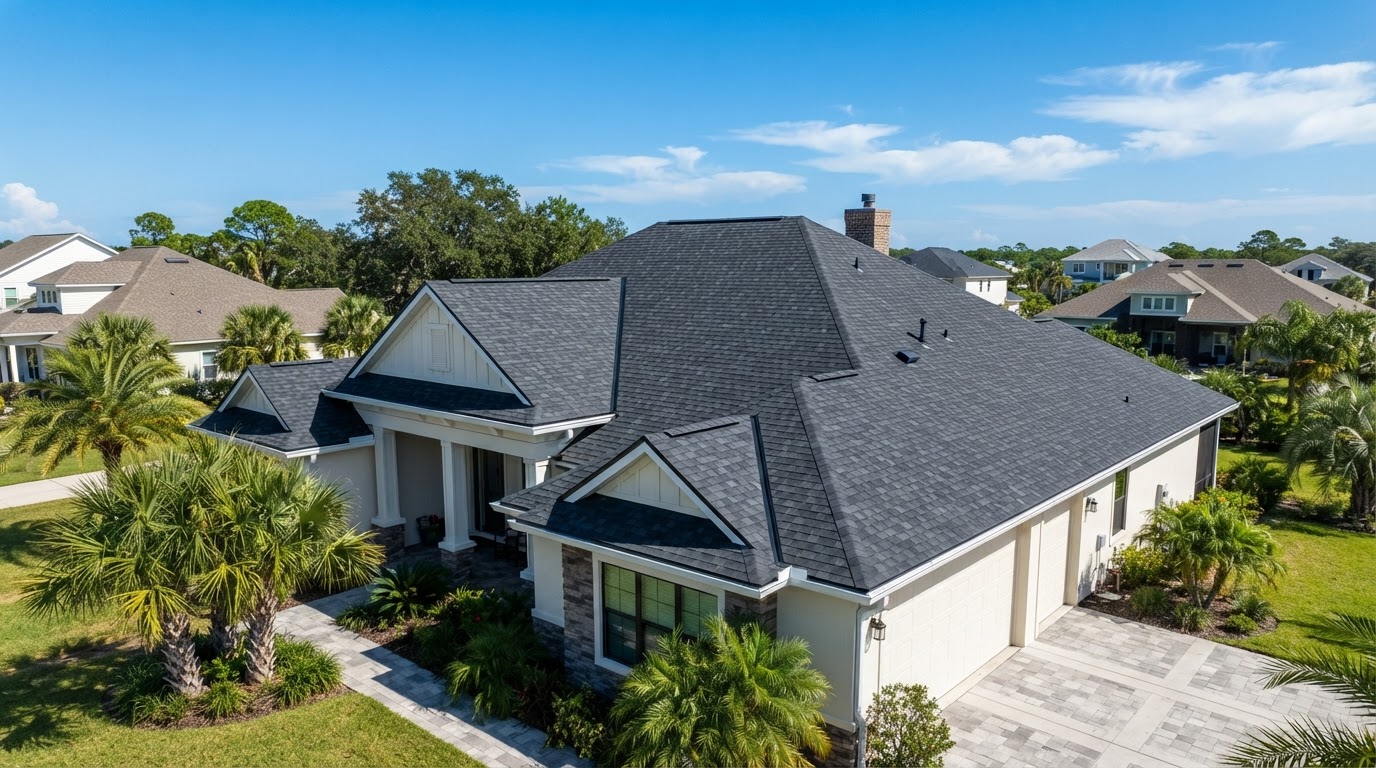
A complete asphalt shingle roof replacement is one of the most common and most consequential investments a Pensacola homeowner makes. Whether your roof is reaching the end of its service life, has taken storm damage, or is driving insurance concerns, a full reroof is the opportunity to specify a shingle system engineered for the western Florida Panhandle's wind, heat, and humidity. We replace aging and storm-damaged shingle roofs across Pensacola and Escambia County using architectural, impact-resistant, and high-wind-rated shingles paired with code-compliant underlayment, flashing, and ventilation so the new roof performs from the deck up.
Asphalt shingle roof replacement is the complete removal of an existing shingle roof and installation of a new shingle system, typically architectural or higher-performance shingles, over verified decking with new underlayment, flashing, and ventilation. In Pensacola and Escambia County, replacement is usually driven by age-related deterioration, repeated storm damage, or insurance requirements, and the shingle selection should account for Gulf Coast wind, heat, UV, and humidity rather than using a generic inland specification.
Signs a Shingle Roof Needs Replacement in Pensacola
Asphalt shingles in the Pensacola climate age under a combination of intense UV, high heat, Gulf humidity, and periodic storm exposure that shortens service life compared to milder climates. Most replacements are not sudden—they follow a pattern of warning signs that develop over years. Recognizing them early lets you plan a replacement on your schedule instead of under emergency pressure after the next named system.
- Granule loss—bare patches and granules collecting in gutters as the protective surface wears away
- Curling and cupping shingle edges that lift in the heat and catch wind
- Cracking across shingle tabs as the asphalt base dries and loses flexibility
- Missing shingles after storms, exposing the underlayment and deck
- Repeated leaks in the same valleys, pipe penetrations, or chimney flashing
- Exposed fiberglass mat where granules have worn through the shingle surface
- Damaged flashing at walls, valleys, and penetrations that allows water beneath the shingles
- Soft or spongy roof deck indicating moisture-damaged plywood beneath
- Storm damage—creased, lifted, or torn shingles after high-wind events
- Increasing repair frequency as isolated fixes no longer keep up with overall aging
Related shingle services
Shingle Options for Pensacola Homes
Not all asphalt shingles perform equally on a Gulf Coast roof. A shingle replacement is the moment to upgrade from a basic 3-tab product to a system engineered for wind, impact, and the Pensacola climate. Each option below trades off cost, appearance, and performance differently, and we help you choose based on your roof geometry, wind exposure, and budget rather than a default.
Architectural Shingles
Multi-layer dimensional shingles with a thicker, richer appearance and generally higher wind ratings than 3-tab. The most common upgrade for Pensacola replacements.
Explore Architectural ShinglesImpact-Resistant Class 4 Shingles
Shingles rated for hail and wind-borne debris impact, which may qualify for insurance consideration. Valuable in storm-exposed areas.
Explore Impact-Resistant ShinglesHigh-Wind Rated Shingles
Shingles with enhanced wind ratings and fastening patterns suited to Escambia County's coastal gusts and high-velocity wind zones.
Explore High-Wind ShinglesDesigner & Luxury Shingles
Premium multi-layer shingles that mimic shake or slate for homeowners who want a high-end architectural appearance.
Explore Designer ShinglesAlgae-Resistant Shingles
Shingles with copper-infused granules that resist the black streaks common in Pensacola's humid, algae-prone climate.
Explore Algae-Resistant ShinglesCool / Solar-Reflective Shingles
Shingles engineered to reflect more solar energy, which can reduce attic heat gain under the Florida sun.
Explore Cool Roof ShinglesWe do not make unsupported manufacturer claims. Each shingle product carries its own wind, impact, and warranty specifications set by the manufacturer, and performance depends on proper installation, fastening, and underlayment. We present shingle options with their manufacturer-stated characteristics and let the documentation speak for itself.
The Shingle Roof Replacement Process
A shingle roof replacement is a sequenced project where each layer must be verified before the next goes on. The longevity of the new roof depends on the deck, underlayment, flashing, and ventilation as much as on the shingles themselves. This is the general sequence we follow for a Pensacola shingle replacement, adjusted to your property and jurisdiction.
- 1Roof inspection—assess shingle condition, deck integrity, flashing, and ventilation
- 2Material selection—match shingle type, underlayment, and ventilation to your wind zone and goals
- 3Tear-off—remove existing shingles down to the deck to expose sheathing for inspection
- 4Deck evaluation—inspect plywood for rot, delamination, and moisture damage
- 5Deck repair where necessary—replace damaged sheathing and re-nail to current high-wind code
- 6Underlayment—install synthetic or self-adhering peel-and-stick as a secondary water barrier
- 7Flashing—renew step, counter, valley, and penetration flashing at every transition
- 8Shingle installation—lay starter strips, shingles, and fasteners per manufacturer specifications
- 9Ridge and ventilation components—ridge caps, ridge vent, and soffit flow balanced for the attic
- 10Final review—site cleanup, visual inspection, and documentation handoff
Shingle Roofing for Gulf Coast Conditions
A shingle specification that performs inland can fall short along the western Florida Panhandle. Pensacola roofs face wind-driven rain that travels horizontally beneath flashings, high winds that lift and crease shingle tabs, intense heat and UV that dry the asphalt base, and humidity that feeds algae growth. The details that determine whether a new shingle roof lasts are beneath the shingles as much as in them.
- Wind-driven rain—sealed underlayment and proper shingle sealing that resist water driven beneath tabs
- High winds—shingles with appropriate wind ratings and enhanced fastening patterns for the velocity zone
- Heat—shingles and underlayment rated for high Florida roof temperatures
- UV—granule quality and shingle formulation that resist drying and cracking under intense sun
- Humidity—ventilation and algae-resistant shingles that combat the black streaks common in Pensacola
- Algae growth—copper-infused granules that resist the Gloeocapsa algae feeding on humid roofs
- Underlayment—synthetic and peel-and-stick barriers as a secondary water defense beneath the shingles
- Starter strips—properly installed starter courses that secure the vulnerable eave and rake edges
- Flashing—step, counter, valley, and penetration flashing detailed to channel water away from transitions
- Ventilation—balanced ridge and soffit flow to relieve attic heat and moisture load
- Manufacturer-specific fastening requirements—nail patterns and placement per the shingle's wind rating
We reference Pensacola, Escambia County, and the western Florida Panhandle naturally as they apply to the local conditions. The shingle and underlayment specification is matched to your specific wind zone and proximity to the coast rather than a single default for every property.
Shingle Alternatives, Conversion & MSFH Considerations
During a shingle replacement some homeowners weigh whether this is the moment to switch to metal, and whether any assistance programs might apply. Both questions deserve honest answers rather than a sales pitch. Below is how we frame the alternatives and the assistance conversation.
- Shingle-to-metal conversion—replacing shingles with a metal system for longer-term performance and lower exposed-fastener maintenance
- Metal roof installation—standing seam, 5V crimp, or metal shingles as an alternative to another asphalt roof
- Architectural shingles—the most common upgrade path for homeowners staying with asphalt
- High-wind rated shingles—an upgrade for homes in high-velocity wind zones that want to remain with shingles
- MSFH considerations—whether qualifying mitigation improvements may align with the program for eligible homes
- Financing options—separate from any grant program, for homeowners spreading the investment over time
The My Safe Florida Home (MSFH) program and financing are separate concepts. MSFH is a state grant program with its own eligibility and approval process; financing is a credit arrangement for spreading project cost. We never suggest MSFH is financing, and we never guarantee grant approval—eligibility is determined exclusively by the State of Florida program.
Frequently Asked Questions
Ready to Replace Your Shingle Roof in Pensacola?
Contact Pensacola Metal & Shingle Roofing Contractors for a detailed written estimate across Pensacola, Escambia County, and Santa Rosa County.
Request Your Roofing Estimate
Direct consultation for Pensacola & Escambia County residential and coastal properties.