Documenting Roof Damage for Insurance Claims Pensacola
Clear documentation can help create an organized record of what was observed after a storm, but documentation does not determine insurance coverage. This is educational roofing content—not legal, adjusting, or coverage advice. We help Pensacola, Escambia County, and western Florida Panhandle homeowners understand what to document after a storm so their records are organized and dated, while staying safely off a wet or damaged roof.
After a storm, an organized record of roof damage includes the date of the event, exterior and interior photos from safe locations, visible roofing damage, missing materials, debris, interior water stains, any temporary protection used, contractor inspection findings, repair estimates, and receipts for emergency mitigation. Documentation does not determine insurance coverage—coverage and claim decisions depend on the policy, cause of loss, the insurer's investigation, and applicable requirements. This guidance is educational, not legal or claim advice, and does not represent homeowners in insurance claims.
What to Document After a Storm
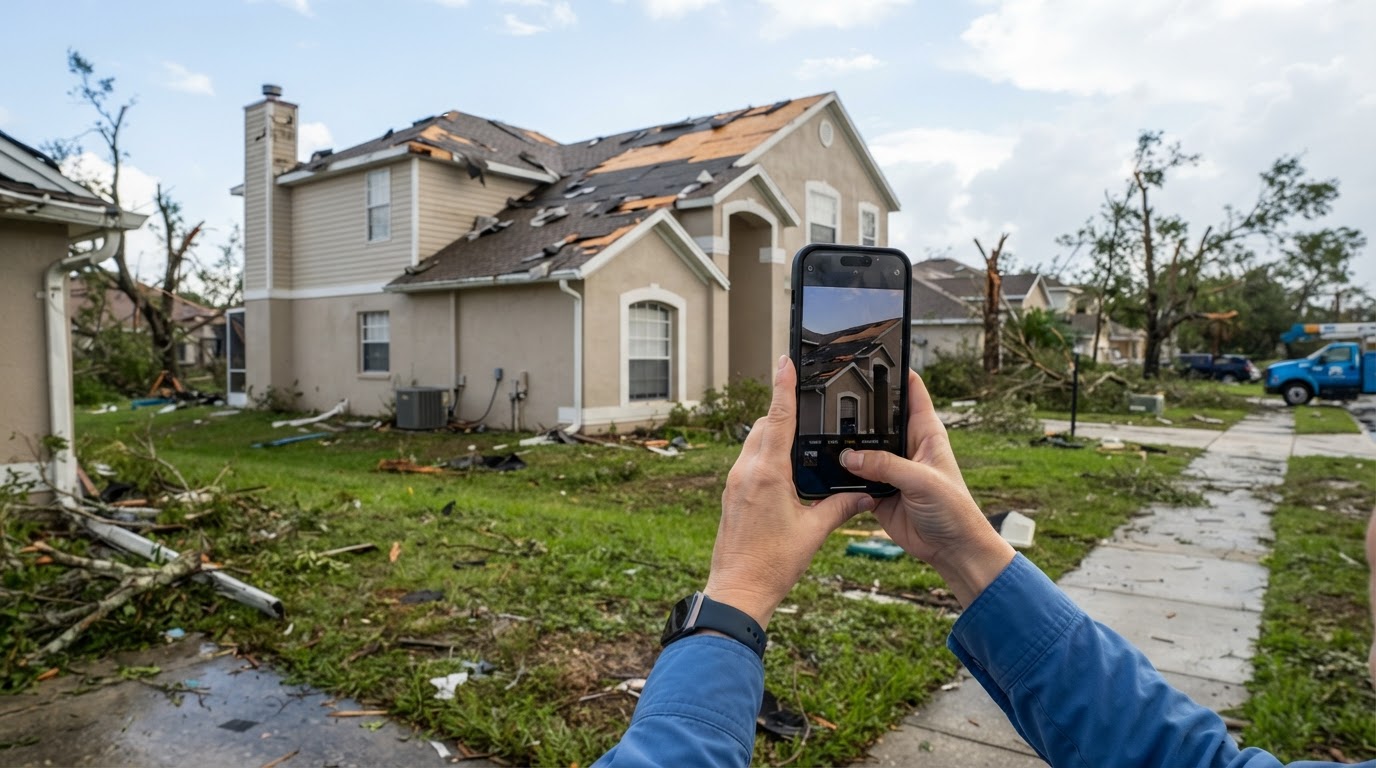
An organized record after a storm starts with the basics and builds outward. The list below is what to capture while the damage is fresh, all of it from safe, ground-level vantage points. The point is a dated, factual record of what was observed—not a claim strategy or a coverage argument.
- The date and weather event that caused the damage
- Exterior property condition before any cleanup
- Visible roofing damage—missing shingles, bent panels, displaced ridge
- Missing roofing materials and where they are on the roof
- Fallen branches, limbs, or debris on or near the roof
- Interior water stains on ceilings or walls
- Damaged ceilings, drywall, or insulation where visible
- Any temporary protection or tarping used
- Contractor inspection findings and repair recommendations
- Repair estimates and scopes of work
- Receipts for emergency mitigation or temporary repairs
Document from safe, ground-level vantage points. Do not climb onto a wet or storm-damaged roof to photograph damage—a wet roof is a fall hazard, and storm damage can hide weakened decking. Photos from the ground, a ladder at the eave, or a safe vantage point are more useful than no photos from an unsafe climb.
Photos That Help Tell the Story
Good documentation photos show context and detail. Wide shots establish where the damage is on the roof and property; closer shots (where safely obtained) show the nature of the damage. Together they create a record that someone reviewing the file later can follow without having been there.
- Wide context photos showing the whole roof slope and surrounding property
- Closer damage photos where safely obtained from a ladder at the eave
- Interior water damage—ceiling stains, wet walls, damaged drywall
- Fallen debris and branches on or near the roof
- Missing shingles or panels visible from the ground
- Any tarping or temporary protection in place
- Before photos if the homeowner already had them from prior work
Do not climb onto a damaged roof to get closer photos. If damage is not visible or safely reachable from the ground or a ladder at the eave, a professional inspection can document it. No photograph is worth a fall from a wet, storm-damaged roof. Do not alter or exaggerate damage—an accurate, dated record is more useful than an overstated one.
Keeping Records Organized
An organized file is more useful than a scattered one. Keeping photographs, dates, contractor communications, inspection reports, estimates, invoices, temporary repair receipts, and policy or claim correspondence in one place makes the record easy to follow and easy to share with the parties who may need it. The discipline is simple; the value is in doing it while the information is fresh.
- Photographs with dates and locations noted
- The date and weather event for each observed damage item
- Contractor communications—calls, emails, written scopes
- Inspection reports from any roofing professional
- Estimates and scopes of work
- Invoices for completed repairs
- Receipts for temporary or emergency repairs
- Policy and claim correspondence from the insurer
Do not alter or exaggerate damage to strengthen a record. An accurate, dated account of what was observed is more credible and more useful than an overstated one. If damage is unclear, a professional inspection can document the actual condition rather than leaving the record to guesswork.
Contractor vs Insurance Adjuster vs Public Adjuster vs Attorney
Roofing documentation is easier to understand once the roles are clear. A roofing contractor, an insurance adjuster, a public adjuster, and an attorney each do different things, and blurring them leads to confusion about who is responsible for what. This page is educational roofing content and does not provide legal, adjusting, or coverage advice.
| Role | Responsibility |
|---|---|
| Roofing contractor | Evaluates roof condition, identifies roofing work, prepares a repair or replacement scope or estimate |
| Insurance adjuster / insurer | Handles the insurer's claim evaluation and coverage process |
| Public adjuster | A separate licensed role that represents the policyholder in a claim, where applicable |
| Attorney | A separate legal role for legal advice or representation, where applicable |
A roofing contractor can document damage and prepare a repair scope, but a contractor does not approve claims, determine coverage, or act as a public adjuster or attorney. Homeowners with claim questions should rely on their insurer and, where appropriate, a licensed public adjuster or attorney for advice specific to their situation—not on a roofing estimate.
Related storm and trust resources
Documentation Is Not Coverage
The single most important framing on this page: documentation does not determine insurance coverage. A thorough, dated, photographed record is valuable because it organizes what was observed—but whether a claim is approved, what is covered, and what is paid depends on the policy, the cause of loss, the insurer's investigation, deductibles, and applicable requirements. No roofing contractor can guarantee a claim outcome.
This page is educational roofing content. It is not legal advice, public adjusting, or insurance-coverage advice, and it does not represent homeowners in insurance claims. For claim-specific guidance, rely on the insurer and, where appropriate, a licensed public adjuster or attorney. For current Florida insurance requirements and program rules, verify through official Florida insurance and building-code resources.
Get the damage documented first
Frequently Asked Questions
Need Roof Damage Documented in Pensacola? Let's Inspect It Safely.
Contact Pensacola Metal & Shingle Roofing Contractors for a detailed written estimate across Pensacola, Escambia County, and Santa Rosa County.
Request Your Roofing Estimate
Direct consultation for Pensacola & Escambia County residential and coastal properties.