How to Spot Storm Chasers & Unlicensed Roofers Pensacola
After major storms, roofing demand increases quickly and homeowners may be approached by companies they have never heard of. Before signing a contract or making payment, verify who the contractor is, what company they represent, what work is proposed, and whether required licensing is current. This is trust-building consumer guidance for Pensacola, Escambia County, and western Florida Panhandle homeowners navigating storm-season roofing offers.
A roofing storm chaser is a contractor (or out-of-area crew) that follows severe-weather events to sign roofing work quickly, often with high-pressure same-day tactics, unclear company identity, and no verifiable local presence. To protect yourself, verify the contractor's identity and current Florida roofing license through official state resources, require a written scope, confirm who pulls the permit, avoid large upfront payments, and do not sign anything under same-day pressure. A roofer can provide a scope and estimate, but a roofer cannot guarantee an insurance claim outcome—that is the insurer's role.
Red Flags to Watch For
Storm chasers rely on pressure and urgency, not on established trust. The warning signs below are the patterns most commonly associated with transient or unqualified roofing offers after a hurricane. None of them proves a contractor is dishonest on its own, but together they signal caution—and any one of them is reason to slow down and verify before signing or paying.
High-Pressure Same-Day Signing
Pressure to sign a contract on the day of the first visit, before you have time to review it or compare offers.
Unclear Company Identity
No clear business name, no verifiable local address, or a company you cannot find in state records.
No Written Scope
Refusal to provide a written scope of work, material list, or project description before payment.
Large Upfront Payment Demands
Unusually large upfront payment demands before any work or materials are on site.
“Free Roof” or “Insurance Must Pay” Claims
Claims that a roof is automatically “free” or that the insurer must pay—no roofer can guarantee coverage.
Pressure to Sign Over Rights
Pressure to sign over insurance rights or authorization without the document being explained.
No Clear Local Contact
No clear local or service contact information, or a number that does not reach a real business.
Requests to Misrepresent Damage
Any request to misrepresent damage, dates, or the scope of work to an insurer or official.
These red flags are described factually and generally. A single warning sign does not prove a specific contractor is dishonest, and legitimate contractors may share some surface traits. The point is to slow down and verify through official sources before signing or paying—not to accuse anyone. If anything feels pressured, that pressure itself is the signal to pause.
How to Verify a Roofing Contractor
Verifying a contractor is not complicated, but it does require going to official Florida sources rather than taking a salesperson's word. The items below are what to confirm before signing a roofing contract after a storm. Current licensing status and requirements can change, so verify through the relevant Florida licensing and DBPR resources at the time of the project.
- Contractor and business identity—a real, findable company name
- Roofing license where required by Florida and local rules
- Current license status, not just that a license number exists
- Insurance documentation where applicable
- A written proposal describing the work
- Who is responsible for pulling the permit
- Clear contract terms—scope, price, payment schedule
- A real physical and contact address
- Manufacturer and product details for the proposed materials
Florida licensing rules and DBPR requirements can change. For current license status, valid registrations, and up-to-date requirements, verify through the relevant Florida licensing and DBPR resources rather than relying on a contractor's printed document alone. A license number that cannot be confirmed as currently active is not the same as a valid license.
Questions to Ask Before Signing
A reputable contractor expects questions and answers them in writing. The checklist below is what to ask before signing a roofing contract after a storm. If a contractor will not answer these in a written proposal, that itself is information about who they are.
- Who is the contracting entity—the real business name?
- What license applies to this project, and is it current?
- Who pulls the roofing permit?
- What materials and system are specified?
- What work is included in the scope?
- What work is excluded?
- What is the payment schedule, and how much is due upfront?
- What warranties are written, and by whom?
- How are change orders handled if additional deck damage is found?
- Who handles cleanup and disposal?
- What happens if additional deck damage is discovered after tear-off?
These questions protect the homeowner and separate contractors who document their work from those who rely on pressure. A written answer to each is more useful than a verbal assurance—it becomes part of the contract record.
Storm Repair & Insurance Sales Tactics
After a storm, some roofing offers blend roofing work with promises about insurance outcomes. Roofers can provide scopes and estimates, but homeowners should be wary of anyone making absolute promises about insurance coverage or claim results. The roles below are different, and a contractor who blurs them may be overpromising.
| Role | What They Do |
|---|---|
| Roofing contractor | Evaluates roof condition, scopes roofing work, prepares a repair or replacement estimate |
| Insurance adjuster / insurer | Handles the insurer's claim evaluation and coverage process |
| Public adjuster | A separate licensed role that represents the policyholder in a claim, where applicable |
| Attorney | A separate legal role for legal advice or representation, where applicable |
No roofer can guarantee that an insurance claim will be approved, that a roof is “free,” or that an insurer must pay for an upgrade. Coverage depends on the policy, cause of loss, the insurer's investigation, and applicable requirements. A contractor who makes absolute insurance promises is overstepping the roofing role—and is a reason to verify more carefully.
The Safer Path: Written Scope, Time to Verify
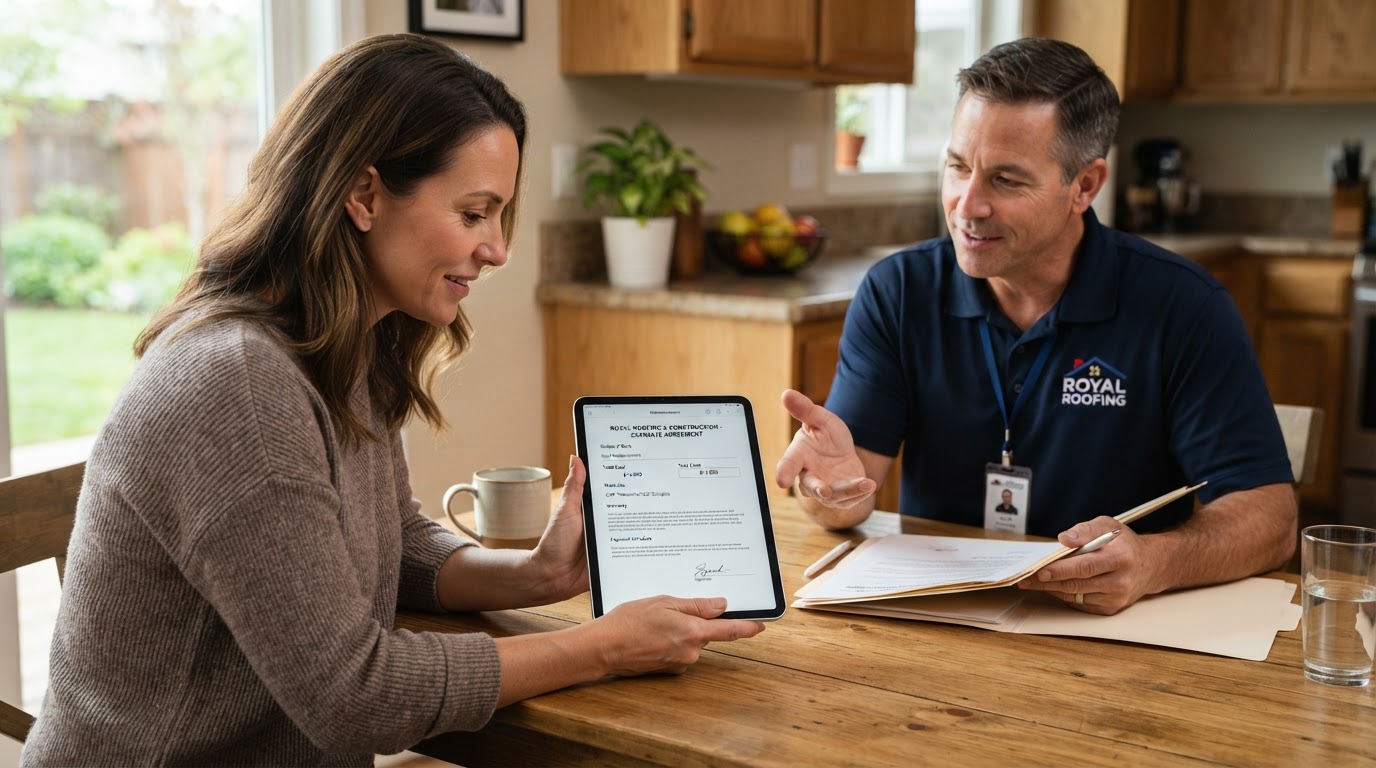
The alternative to storm-chaser pressure is simple: a written scope of work, time to verify the contractor's license and identity, a clear contract, and a payment schedule tied to actual work. A contractor confident in their work does not need same-day signing or a guarantee about insurance. The right roofing relationship is built on documentation, not urgency.
After a hurricane in Pensacola, the homeowners who protect themselves best are the ones who slow down, document the damage, verify the contractor, and sign only when the scope and terms are clear in writing. That is the standard this site is built around—and the opposite of the storm-chaser playbook.
Start with an inspection and written estimate
Frequently Asked Questions
Want a Written Roofing Estimate in Pensacola? Let's Inspect First.
Contact Pensacola Metal & Shingle Roofing Contractors for a detailed written estimate across Pensacola, Escambia County, and Santa Rosa County.
Request Your Roofing Estimate
Direct consultation for Pensacola & Escambia County residential and coastal properties.