Emergency Roof Tarping Pensacola
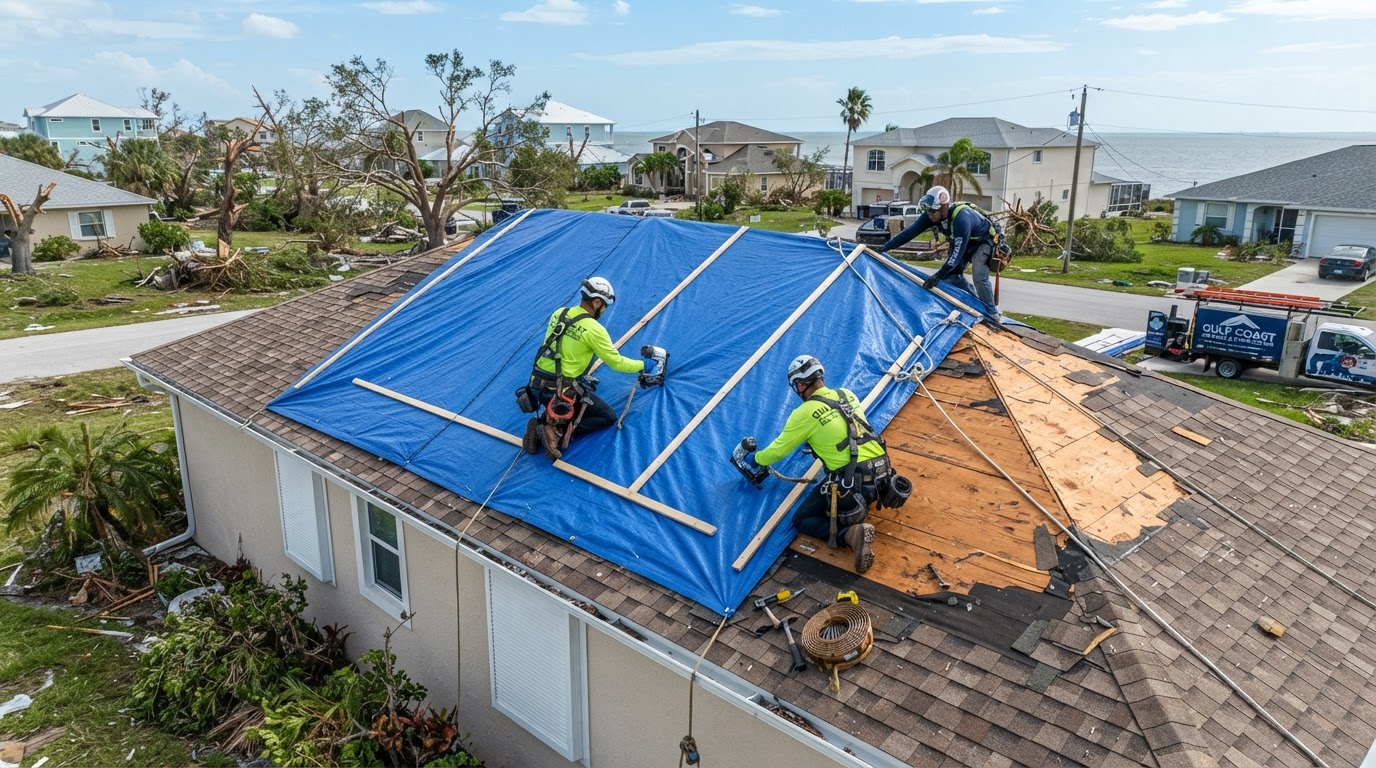
When a storm leaves the roof exposed—missing shingles, a fallen branch, a damaged metal panel, an open hole—emergency tarping is the temporary barrier that stops additional water from entering until permanent repairs can be completed. We provide professional roof tarping across Pensacola, Escambia County, and the western Florida Panhandle after wind, storms, and sudden roof damage. Tarping is protection, not a permanent repair.
Emergency roof tarping is temporary weather protection intended to reduce additional water intrusion until permanent roofing repairs can be completed. It is not a permanent roof repair. A tarp covers exposed roofing, sheds water away from the damaged area, and protects the roof deck and interior while the permanent repair is scheduled. Safety and structural condition must be considered before anyone accesses a storm-damaged roof, and tarping should not conceal the need for permanent repairs beneath it.
When a Roof May Need Temporary Tarping
Tarping fits the window between a damaging event and a permanent repair. When the roof is exposed to the sky or actively leaking, a tarp reduces the water reaching the interior while the real repair is planned, scoped, and scheduled. The situations below are the most common triggers for emergency tarping on the Gulf Coast.
- Missing shingles that leave the roof deck or underlayment exposed to rain
- Exposed decking where storm damage has opened the roof surface
- Tree impact that has pierced or displaced roofing material
- Damaged metal panels bent or torn loose by wind
- Large storm-created openings from wind or debris
- Active water intrusion that is reaching the interior
- Delayed permanent repairs when weather is expected before the repair can happen
- Severe flashing damage that has opened a path for wind-driven rain
Safety and structural condition must be considered before anyone accesses the roof. A wet, storm-damaged roof is a fall hazard, and damage can hide weakened decking. Professional tarping is safer than a homeowner attempting it, and the structural condition of the roof must be evaluated before anyone walks on it.
What Professional Tarping Should Accomplish
A proper emergency tarp does a specific job: it covers the exposed roofing, sheds water away from the damaged area, secures temporary protection against wind, and reduces additional interior exposure until the permanent repair is complete. It is not a repair—it is a bridge between the damage and the fix.
- Cover exposed roofing—seal the opening where shingles, panels, or decking are missing
- Shed water—direct runoff away from the damaged area so it does not reach the deck or interior
- Secure temporary protection—anchor the tarp so wind does not lift it before repairs are made
- Protect damaged roof areas—keep additional rain and debris out of the compromised section
- Reduce additional interior exposure—limit further water damage while the permanent repair is scheduled
We do not provide detailed DIY anchoring instructions that could encourage unsafe roof access. Tarping a damaged roof requires working at height on a surface that may be wet or structurally compromised. Professional installation is safer and more reliable than attempting it without the right equipment and safety measures.
Tarping should not conceal the need for permanent repairs. A tarp left in place indefinitely is not a solution—it is a deferral. The tarp buys time to inspect the damage, scope the repair, and schedule the permanent fix. The permanent repair still has to happen, and the longer the tarp stays, the more likely the underlying damage worsens.
What Homeowners Should Do While Waiting
Between the storm and the tarp—or between the tarp and the permanent repair—there are safe actions that protect the interior and preserve the evidence needed for repair and any insurance process. None of them require climbing onto the roof.
- Move belongings away from active leaks—furniture, electronics, and valuables out of the water path
- Use containers where safe—buckets or towels to catch drips and limit interior spread
- Photograph interior damage—document stains, water, and any visible roof damage from inside
- Avoid electrical hazards—keep away from outlets, fixtures, or wiring near active leaks
- Do not enter unsafe attic areas—soft decking or structural damage may not be visible
- Stay off wet or damaged roofing—do not climb up to inspect or patch storm damage
- Preserve documentation—save photos, estimates, and any correspondence together
If there are downed power lines, gas smell, structural collapse, or fire, stay clear of the building and contact the appropriate emergency utility or public-safety service immediately. Do not approach the roof or the building until the immediate hazard has been handled.
After the Tarp: Permanent Roof Repair
The tarp is temporary. The permanent repair is what restores the roof assembly. Once the tarp is in place and the interior is protected, the next step is a full roof inspection that scopes the actual damage and determines whether repair, partial reroof, or full replacement fits the situation.
Roof Inspection
A full inspection scopes the storm damage beneath and around the tarped area—decking, underlayment, flashing, and the roofing material itself.
Roof InspectionsShingle or Metal Repair
Localized repair of the damaged components once the scope is clear—shingle replacement, metal panel repair, flashing correction.
Shingle Roof RepairMetal Roof RepairDeck Repair if Needed
If water reached the decking, the damaged plywood or OSB may need replacement before new roofing is installed.
Roof Deck & Plywood ReplacementConnected storm repair services
What a Tarp Can & Cannot Do
| A Tarp Can | A Tarp Cannot |
|---|---|
| Cover exposed roof areas | Permanently repair the roof |
| Shed water away from damage | Stop all water intrusion in every condition |
| Reduce additional interior exposure | Replace damaged decking or structure |
| Buy time until permanent repair | Substitute for a roof replacement |
| Protect against moderate wind and rain | Withstand a full hurricane indefinitely |
We do not promise 24/7 service or a specific arrival time. Emergency tarping is scheduled as quickly as conditions and capacity allow, and the timing depends on storm conditions, safety, and demand after a major event. We communicate the realistic timing when you request tarping rather than promising an arrival we cannot guarantee.
Frequently Asked Questions
Roof Exposed After a Storm? Let's Protect It in Pensacola.
Contact Pensacola Metal & Shingle Roofing Contractors for a detailed written estimate across Pensacola, Escambia County, and Santa Rosa County.
Request Your Roofing Estimate
Direct consultation for Pensacola & Escambia County residential and coastal properties.