
Pipe Boot & Roof Vent Repair Pensacola
Every pipe, vent, and penetration that passes through a roof is a potential leak point—because the flashing, boot, and seal that keep water out at the penetration must stay watertight for the life of the roof. In Pensacola's heat, UV, and storm exposure, those seals deteriorate, and a plumbing vent or roof vent that was watertight for years can begin leaking without any visible shingle damage. We repair pipe boots, roof vents, and penetration flashing across Pensacola and Escambia County.
Pipe boot and roof vent repair fixes leaks at the points where plumbing vents, exhaust vents, and other penetrations pass through the roofing system. Roof penetrations are common leak points because the flashing, boots, and seals that waterproof them deteriorate over time from UV, heat, and weather. The leak often appears during heavy rain, and the fix usually requires replacing the failed boot or flashing rather than applying surface sealant, because a failed flashing assembly will continue to leak beneath any sealant applied on top.
What Is a Pipe Boot?
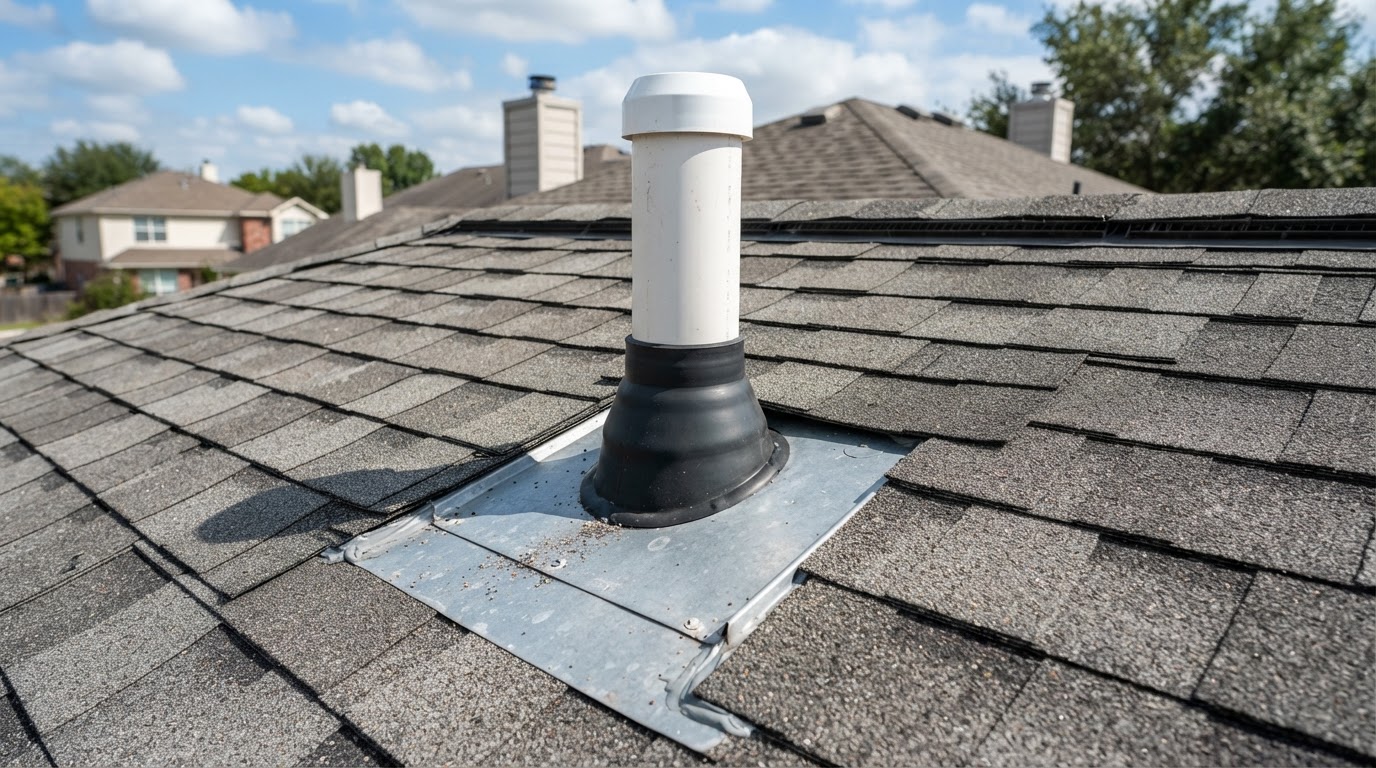
A pipe boot is the flashing assembly that seals around a plumbing vent pipe where it passes through the roof. Plumbing vents are the pipes that extend from the home's drain-waste-vent system up through the roof to allow air into the plumbing. Where each pipe penetrates the roof, a boot—typically a metal base with a rubber or neoprene seal—caps the opening and keeps water out while allowing the pipe to pass through.
- Plumbing vent penetration—the pipe that extends from the drain-waste-vent system through the roof
- Flashing and boot assembly—the metal base and flexible seal that waterproof the penetration
- Rubber or neoprene seal—the flexible collar that seals against the pipe and flexes with movement
- Metal flashing base—the flat metal flange that integrates with the surrounding shingles
- Interaction with shingles—the boot flange layered beneath and over shingles to shed water
The seal is the vulnerable component. Rubber and neoprene seals break down over time from UV exposure and heat, cracking and pulling away from the pipe. Once the seal cracks, water runs down the pipe and beneath the flashing into the attic. A pipe boot can fail while the surrounding shingles look perfectly intact, which is why a vent-area leak does not always come with visible roof damage.
Signs of Pipe Boot or Vent Failure
Pipe boot and vent failures announce themselves through water intrusion and visible deterioration. Because the leak source is a small penetration rather than a broad roof failure, the symptoms can be subtle at first—a stain near a vent pipe, moisture in the attic after a storm—before becoming an active leak. Recognizing the signs early keeps a boot replacement a minor repair rather than a source of deck damage.
- Ceiling stains—discoloration appearing near a plumbing wall or below a vent penetration
- Attic moisture—dampness or water marks on the underside of the deck near a pipe
- Cracked rubber boot—the neoprene seal visibly split or pulled away from the pipe
- Loose flashing—the metal base lifted or shifted from its original position
- Exposed fasteners—nails or screws visible where the flashing has moved
- Deteriorated sealants—caulk or sealant that has cracked, shrunk, or pulled away
- Rust where metal components are involved—corrosion on the flashing base
- Leaks during heavy rain—water intrusion that appears specifically during storms
Other Roof Vent Leaks
Pipe boots are one type of penetration, but a roof has several. Static vents, ridge vents, exhaust fan vents, and other mechanical penetrations all pass through the roofing system, and each has its own flashing and sealing details that can fail. A leak near any penetration deserves a close look at the flashing, not just the shingles around it.
- Static vents—fixed roof vents whose flashing can crack, lift, or deteriorate
- Ridge vents—the ventilation channels at the roof peak that can leak if damaged or improperly installed
- Exhaust penetrations—kitchen, bath, or dryer vent flashing that can fail at the seal
- Flashing around vents—the metal flange integrating the vent with the shingles
- Improperly sealed penetrations—vents installed with inadequate or failed sealing
We do not advise homeowners to modify plumbing or mechanical systems themselves. A pipe boot or vent flashing repair is a roofing repair that addresses the flashing and seal where the penetration meets the roof—not a plumbing or HVAC repair. If the leak source is the plumbing or mechanical system itself rather than the roof penetration, we identify it and recommend the appropriate professional.
Related penetration and leak services
Repairing Penetrations Near Pensacola
Pensacola's climate accelerates the deterioration of penetration seals in specific ways. UV breaks down rubber and neoprene boots, heat softens and shrinks sealants, wind-driven rain forces water beneath any loose flashing, high humidity slows drying so moisture lingers, and tropical storms test every penetration seal at once. The combination explains why a vent that was watertight for years can begin leaking without any obvious cause.
- UV deterioration—sun exposure that cracks and degrades rubber and neoprene boot seals
- Heat—high temperatures that soften, shrink, and age sealants over time
- Wind-driven rain—water forced beneath loose or failed flashing during storms
- High humidity—moisture that lingers and accelerates corrosion and seal breakdown
- Tropical storms—sustained wind and rain that test every penetration seal simultaneously
- Seal deterioration—the gradual breakdown of caulk and sealant that waterproofs the penetration
- Flashing movement—thermal expansion and wind that shift flashing from its sealed position
This is why simply applying surface sealant may not correct a failed flashing assembly. A cracked pipe boot or shifted vent flashing will continue to leak beneath any sealant applied on top of it, because the water is entering at the failed seal, not at the surface. A proper repair replaces the failed boot or flashing and re-establishes the waterproof detail, rather than layering sealant over a problem that will recur.
Why Replacement Beats Surface Sealant
The most common reason a pipe boot or vent repair fails is that a sealant was applied over a failed flashing rather than replacing the flashing itself. Sealant can buy time on a small gap, but a cracked neoprene boot or a lifted metal flashing is a mechanical failure that sealant cannot fix. The water continues to enter at the failed seal, beneath the new sealant, and the leak returns—often worse, because the delay allowed more water to reach the deck.
A proper pipe boot repair removes the failed boot, installs a new boot with a sound seal, and integrates the flashing with the surrounding shingles. A proper vent repair replaces or re-seats the failed flashing and re-establishes the waterproof detail. The goal is a repair that addresses the mechanical failure, not one that covers its symptom.
- Sealant is temporary—a surface application that does not fix a cracked boot or shifted flashing
- Replacement addresses the failure—a new boot or flashing re-establishes the waterproof detail
- Diagnosis before repair—confirming the leak source is the penetration and not another path
- Deck check—verifying the sheathing beneath the failed penetration has not been damaged
Connected leak and flashing services
Frequently Asked Questions
Leaking Around a Plumbing Vent or Roof Vent in Pensacola?
Contact Pensacola Metal & Shingle Roofing Contractors for a detailed written estimate across Pensacola, Escambia County, and Santa Rosa County.
Request Your Roofing Estimate
Direct consultation for Pensacola & Escambia County residential and coastal properties.