Ridge Vent & Attic Ventilation Roofing Pensacola
Roof ventilation is one of the most misunderstood parts of a Florida roofing system. A ridge vent is not a standalone fix—it is one half of an exhaust-and-intake system that has to be balanced to work. We evaluate ridge vent installation, repair, and attic ventilation across Pensacola and Escambia County as part of the complete roof assembly, because ventilation affects shingle life, deck condition, and attic heat in ways that a new roof alone cannot solve.
Roof ventilation manages heat and moisture in the attic by allowing intake and exhaust airflow when the entire ventilation system is properly designed. A ridge vent is one exhaust method, but it must work with adequate soffit intake ventilation rather than functioning as an isolated component. Balanced intake and exhaust airflow—not simply adding more vents—is what protects shingles, decking, and the attic from heat and moisture damage.
How Ridge Ventilation Actually Works
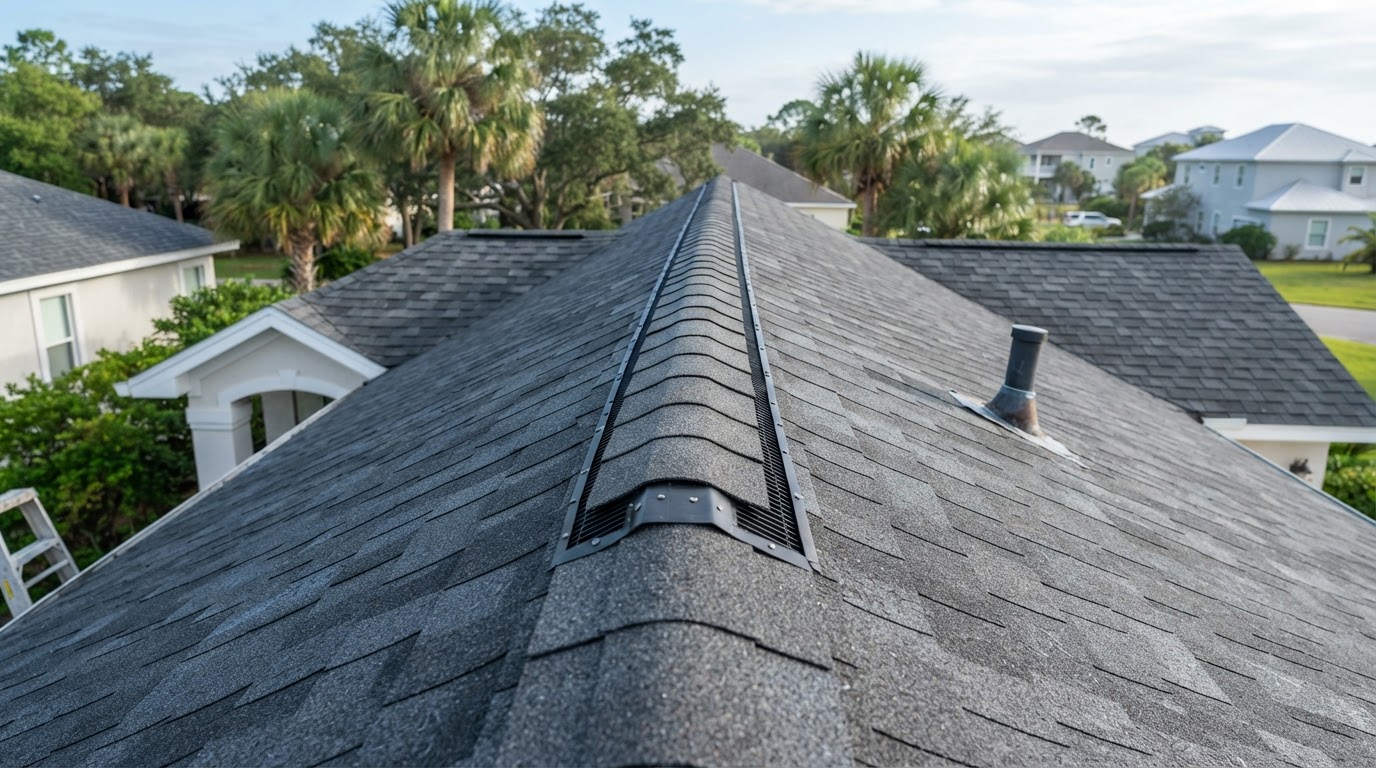
A ridge vent is a continuous exhaust opening installed along the peak of the roof. As attic air heats up, it rises and exits through the ridge vent, drawing cooler outside air in through soffit vents at the eaves. This continuous exchange is what removes heat and moisture from the attic. But the ridge vent only works if the soffit intake can supply enough replacement air—if intake is blocked or inadequate, the ridge vent has nothing to pull, and airflow stalls.
- Ridge vents as exhaust—hot air exits through the continuous opening at the roof peak
- Soffit intake ventilation—cooler air enters through vents at the eaves
- Air movement—the continuous exchange that removes attic heat and moisture
- Balanced system—intake area matched to exhaust area so airflow is sustained
- Attic heat—reduced by continuous airflow rather than isolated venting
- Moisture—carried out by moving air before it condenses on the deck
Simply adding more vents is not automatically better. Ventilation works as a balanced system: the exhaust area and the intake area must be matched, and mixing different exhaust vent types on the same roof can short-circuit airflow. A ridge vent paired with adequate soffit intake is a well-established system; adding a ridge vent to a roof with blocked or insufficient soffits does little.
Signs of Roof Ventilation Problems
Ventilation problems show up in the attic and on the roof surface long before they become leaks. In Pensacola's long hot seasons, an under-ventilated attic bakes the underside of the roof deck and the shingles above it, accelerating deterioration that a balanced ventilation system would prevent. Recognizing the signs early protects both the roof and the shingles.
- Excessive attic heat—attic temperatures far above outside air on sunny days
- Moisture or condensation evidence—dampness, frost, or water marks on the deck
- Premature shingle deterioration—shingles aging faster on the hottest roof planes
- Rusted fasteners or nails—corrosion in the attic from trapped moisture
- Uneven ventilation—some attic areas stagnant while others vent
- Blocked soffit intake—insulation or debris covering eave vents
- Damaged ridge vents—cracked, lifted, or displaced ridge vent components
- Roof leak symptoms near vents—water intrusion around vent openings
These symptoms may have multiple causes. Excessive attic heat can also reflect insufficient insulation or air sealing, and shingle deterioration can result from material age or storm damage. A ventilation evaluation considers the whole assembly—intake, exhaust, insulation, and the roof itself—rather than attributing every problem to ventilation alone.
Florida Heat, Humidity & Attic Performance
Pensacola's climate puts attic ventilation under sustained stress for much of the year. Long hot seasons, intense solar heat on the roof surface, and high humidity combine to load the attic with heat and moisture that only continuous ventilation can remove. A roof in a cooler climate can get by with minimal ventilation; a Gulf Coast roof cannot.
- Long hot seasons—sustained heat that keeps attic temperatures elevated for months
- Solar heat—direct sun that raises roof surface temperatures well above air temperature
- Humidity—moisture that condenses on cooler deck surfaces without airflow
- Moisture buildup—the dampness that leads to deck and fastener deterioration
- Air conditioning loads—attic heat that transfers into living spaces below
- Roof surface temperatures—extreme heat that ages shingles from both sides
Ventilation does not work in isolation. It interacts with insulation, air sealing, roof design, intake vents, and exhaust vents as part of the whole building envelope. Ridge and soffit ventilation removes heat and moisture from the attic, but insulation resists heat transfer into the living space, and air sealing prevents humid indoor air from entering the attic. We do not promise specific energy savings from ventilation alone, because the attic's performance depends on all of these components working together.
Ridge Vent Repair During Reroofing
A reroof is the ideal time to evaluate and correct attic ventilation, because the ridge and the soffit interface are both exposed. We do not simply transfer an old, damaged ridge vent onto a new roof—we assess whether the existing ventilation system was adequate and whether the ridge vent, intake, and components should be upgraded or replaced to match the new roofing system.
- 1Inspect existing ventilation—evaluate ridge vent, soffit intake, and overall airflow
- 2Check damaged ridge caps—replace cracked or wind-damaged caps that affect the ridge vent
- 3Evaluate existing ridge vent—determine whether to reuse, repair, or replace
- 4Confirm intake pathway—verify soffit vents are clear and adequate for balanced airflow
- 5Replace components where appropriate—install ridge vent matched to the new roof system
- 6Integrate ridge system with new shingles—seal and cap the ridge to shed water and vent air
Ventilation Mistakes That Backfire
Well-intentioned ventilation changes can make an attic worse rather than better when they ignore how the system works together. The most common mistakes involve adding exhaust without matching intake, mixing exhaust types, or blocking the intake that the system depends on. We evaluate the existing system before recommending changes.
- Adding exhaust without intake—a ridge vent with blocked or missing soffits stalls airflow
- Mixing exhaust types—ridge vents plus box vents short-circuit the system
- Blocked soffit intake—insulation pushed into eaves that covers the intake vents
- Undersized intake—exhaust area larger than intake so the system cannot sustain flow
- Disconnected components—a ridge vent installed without the required cut opening beneath it
- Damaged ridge vent—cracked or lifted components that leak while also failing to vent
The goal of ventilation is balanced, continuous airflow—not the maximum possible number of vents. A properly balanced ridge-and-soffit system moves air steadily through the attic; an unbalanced or over-vented roof can actually pull conditioned air from the living space or allow weather entry. We design ventilation to work, not to look busy.
Frequently Asked Questions
Concerned About Attic Heat or Ridge Vent Condition in Pensacola?
Contact Pensacola Metal & Shingle Roofing Contractors for a detailed written estimate across Pensacola, Escambia County, and Santa Rosa County.
Request Your Roofing Estimate
Direct consultation for Pensacola & Escambia County residential and coastal properties.