Residential Roof Inspections Pensacola
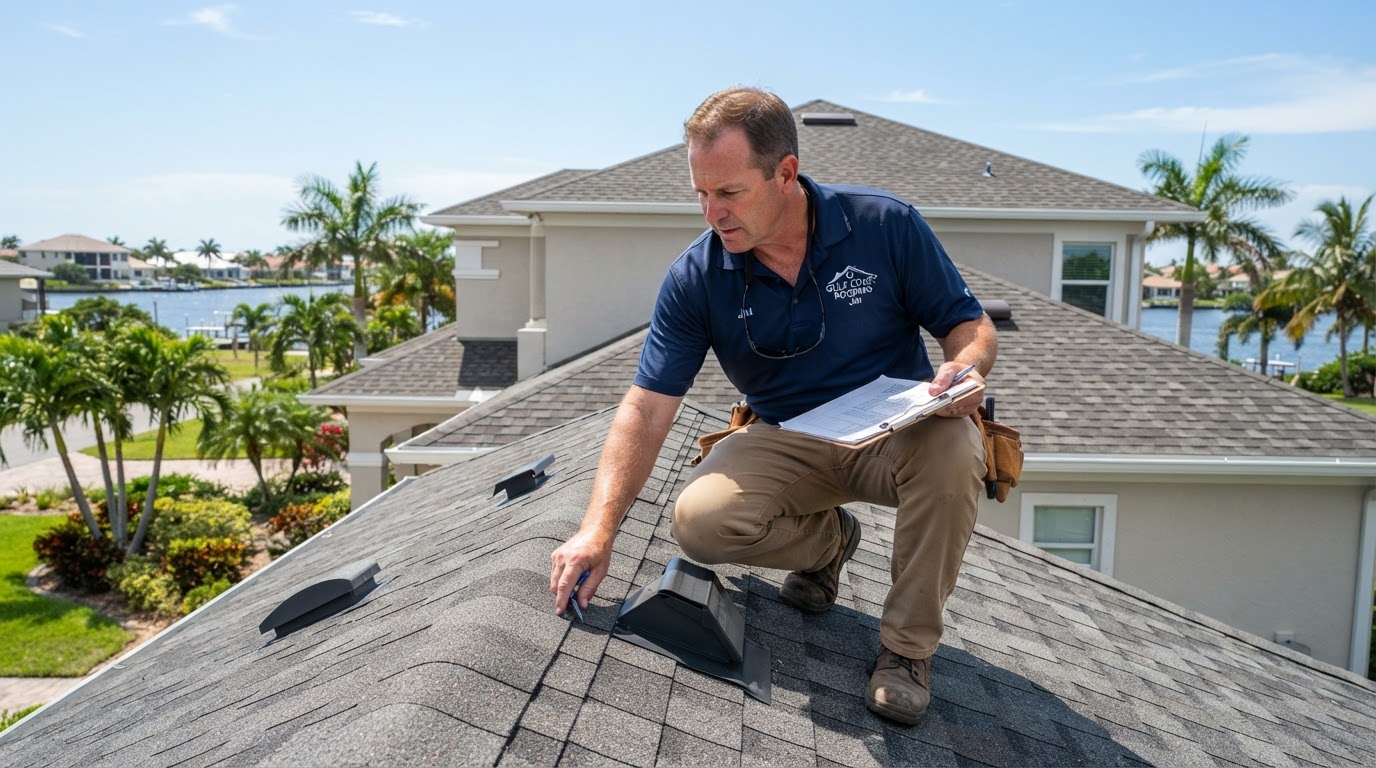
A roof inspection answers a specific question: what is the actual condition of this roof right now? Whether you are chasing a leak, assessing storm exposure, weighing repair against replacement, or buying a home in Pensacola, an inspection gives you a documented read on the roof covering, flashing, penetrations, and visible structure before you make a decision. We inspect both metal and asphalt shingle roofing systems across Pensacola, Escambia County, and the western Florida Panhandle.
A residential roof inspection evaluates visible roofing components for deterioration, storm damage, leak sources, and areas that may need repair or replacement. The scope can include roof coverings, flashing, penetrations, valleys, ridges, drainage details, and visible decking or attic evidence where accessible. An inspection is distinct from a wind mitigation inspection, a 4-point inspection, a general home inspection, an engineering inspection, or an insurance adjustment—each serves a different purpose and documents different things.
What a Roof Inspection Should Review
A thorough residential roof inspection is organized by system rather than by a quick walk-around. Each component category—covering, details, and visible condition—tells a different part of the roof's story. The depth of inspection depends on accessibility, roof geometry, and weather conditions on the day of the evaluation.
Roof Covering
Asphalt shingles, standing seam, 5V crimp, exposed-fastener panels, and other metal systems are reviewed for material condition, fastener integrity, corrosion, granule loss, and panel or shingle damage.
Roof Details
Valleys, ridges and hips, flashing, pipe boots, roof vents, skylights, chimney and wall transitions, and drip edge are checked for the failures that cause most leaks.
Visible Condition
Missing materials, cracking, curling, granule loss, corrosion, loose fasteners, panel damage, active leaks, and storm damage are documented where visible.
Inspection depth depends on accessibility and roof conditions. Some damage—particularly deck deterioration beneath intact roofing—cannot be confirmed without removing the roof covering, which is why certain findings are flagged for follow-up rather than stated as certainty.
When Should a Roof Be Inspected?
Roofs rarely fail on a predictable calendar. The conditions that warrant an inspection are event-driven or decision-driven—a storm passes through, a stain appears on the ceiling, a purchase is pending. Knowing when to schedule an inspection is as important as knowing what it covers.
- After significant wind or storm events—when damage may be subtle and not yet leaking
- When leaks appear inside the home or moisture is found in the attic
- Before deciding between repair and replacement on an aging roof
- Before purchasing or selling a home, so the roof's condition is documented
- When the roof's age is uncertain and insurance or maintenance decisions depend on it
- Before converting shingles to metal, to confirm the deck and structure can support the new system
- When visible deterioration develops—curling, staining, granule loss, or corrosion
- Before major roof maintenance, to prioritize where attention is needed
Inspection guides next-step decisions
Roof Inspections After Pensacola Storms
Pensacola's storm season puts roofs under stresses that produce damage long before an interior leak appears. High winds lift edges, wind-driven rain forces water beneath flashing, tropical systems test every fastener and seam at once, and debris impacts crack shingles or dent metal panels. The damage is often subtle—a creased shingle tab, a slightly backed-out screw, a lifted ridge cap—that does not immediately leak but will the next time conditions align.
- High winds that lift shingle tabs, crease shingles, and displace ridge caps
- Wind-driven rain that forces water beneath loose flashing and lifted edges
- Tropical systems that stress every fastener, seam, and penetration simultaneously
- Missing shingles and lifted edges that expose underlayment to the next storm
- Damaged ridge caps that leave the roof's most exposed line vulnerable
- Metal panel movement—seams shifted or clips stressed by wind uplift
- Fastener issues—screws loosened or washers compressed by storm cycling
- Flashing damage and debris impact that may not yet be leaking
Visible storm damage does not automatically qualify a roof for insurance coverage. Whether damage is covered, and to what extent, depends on the policy, the documented condition, and the insurer's adjustment process. We document what we observe; we do not determine coverage.
What Happens After the Inspection?
An inspection is only useful if it leads to a clear decision. The findings fall into a pathway that moves from the least intervention to the most, depending on the roof's actual condition rather than a one-size-fits-all recommendation. Knowing where your roof falls on this spectrum is the point of the evaluation.
- 1No significant repair needed — the roof is serviceable; monitor and maintain on a sensible schedule.
- 2Localized repair — correct specific damaged components such as missing shingles, a failed pipe boot, or a damaged section of flashing.
- 3Partial reroof — address a distinct roof section when damage is isolated but too extensive for spot repair.
- 4Full replacement — consider when deterioration is widespread, the roof has reached end-of-life, or repair is no longer economical.
- 5Metal conversion — evaluate shingle-to-metal options if full replacement is warranted and a more durable system is desired.
Roof Inspections vs Other Inspections
Homeowners are often asked for several different inspection documents—by insurers, lenders, buyers, and sellers—and the terms get used interchangeably when they should not be. A general residential roof inspection is roof-focused and condition-focused. It is not the same as the specialized documents a real-estate or insurance transaction may require, and knowing the difference prevents scheduling the wrong evaluation.
| Inspection Type | What It Covers | Who Typically Requests It |
|---|---|---|
| Residential roof inspection | Roof covering, flashing, penetrations, visible condition, leak sources | Homeowner, buyer, or seller for condition information |
| Wind mitigation inspection | Documenting qualifying wind-resistant construction features | Insurance carrier for premium credits |
| 4-point inspection | Roof, electrical, plumbing, and HVAC—major systems overview | Insurer for older-home underwriting |
| Home inspection | Whole-house condition including structure, systems, and components | Buyer during a real-estate transaction |
Before scheduling, confirm exactly which document the requesting party needs. A general roof condition evaluation may not satisfy an insurer that requires a wind mitigation form, or a lender that requires a 4-point inspection. Matching the inspection to the request saves a second visit.
Related documentation services
Inspecting Metal Roofs vs Shingle Roofs
Metal and shingle roofs deteriorate differently and need different inspection focus. A shingle inspection looks for granule loss, curling, creasing, and flashing failures. A metal inspection looks for fastener integrity, seam condition, coating breakdown, and corrosion—different failure modes that require different eyes.
- Shingle roofs: granule accumulation in valleys and gutters, curling and clawing tabs, creased wind damage
- Shingle roofs: flashing and valley integrity, pipe boot seal condition, ridge cap attachment
- Metal roofs: loose or backed-out fasteners, failed washers, open seams, clip movement
- Metal roofs: coating condition, surface oxidation, cut-edge protection, corrosion around fasteners
- Both systems: flashing at penetrations and walls, valley drainage, ridge and edge detailing
- Both systems: underlayment exposure, deck evidence where accessible, storm impact
Material-specific inspection and repair
Frequently Asked Questions
Need a Roof Condition Evaluation in Pensacola?
Contact Pensacola Metal & Shingle Roofing Contractors for a detailed written estimate across Pensacola, Escambia County, and Santa Rosa County.
Request Your Roofing Estimate
Direct consultation for Pensacola & Escambia County residential and coastal properties.