Metal Roof Over Shingles Installation Pensacola
Installing a metal roof over an existing asphalt shingle layer is one of the most asked-about reroofing paths in Pensacola. When the conditions are right, a metal roof-over can reduce tear-off labor, keep old shingles out of the landfill, and shorten the project timeline. When the conditions are not right, covering damaged decking or trapped moisture simply hides a problem that will surface as a leak. We evaluate every roof-over candidate on its own merits across Pensacola and Escambia County before recommending a path—because no two decks, shingle histories, or building jurisdictions are exactly alike.
A metal roof can be installed over shingles in Pensacola only when the existing roof has a single sound layer, the deck beneath is structurally solid and flat, there is no trapped moisture or active leaking, and the installation method meets Florida Building Code and the panel manufacturer's requirements for your wind zone. Overlay feasibility depends on existing roof condition, number of existing layers, deck integrity, moisture, local code requirements, manufacturer installation requirements, roof geometry, and structural condition. Not every home qualifies, and a professional inspection is the only way to know for certain.
When a Metal Roof-Over May Make Sense in Pensacola
A metal roof-over is not a shortcut—it is an engineered alternative that works only on roofs that are aging but still structurally serviceable. When the existing shingles are flat, well-adhered, and sitting on a solid deck, installing metal above them can be a sensible way to transition to a longer-lasting system without the cost and waste of a full tear-off. The goal is always the same: a roof assembly that performs as intended for decades, whether the metal attaches to the deck, to battens, or to an approved overlay.
- Aging but structurally serviceable shingle systems with good residual adhesion and no widespread curling
- Homeowners who want to transition to metal without the full labor and disposal cost of a tear-off
- Tear-off considerations where disposal access, dumpster logistics, or project timeline make removal disruptive
- Waste reduction—keeping a single, intact shingle layer out of the landfill when it is safe to leave it
- Time and labor savings on simpler roof geometries that meet overlay criteria
- Roofing-system compatibility between the existing substrate and the chosen metal profile
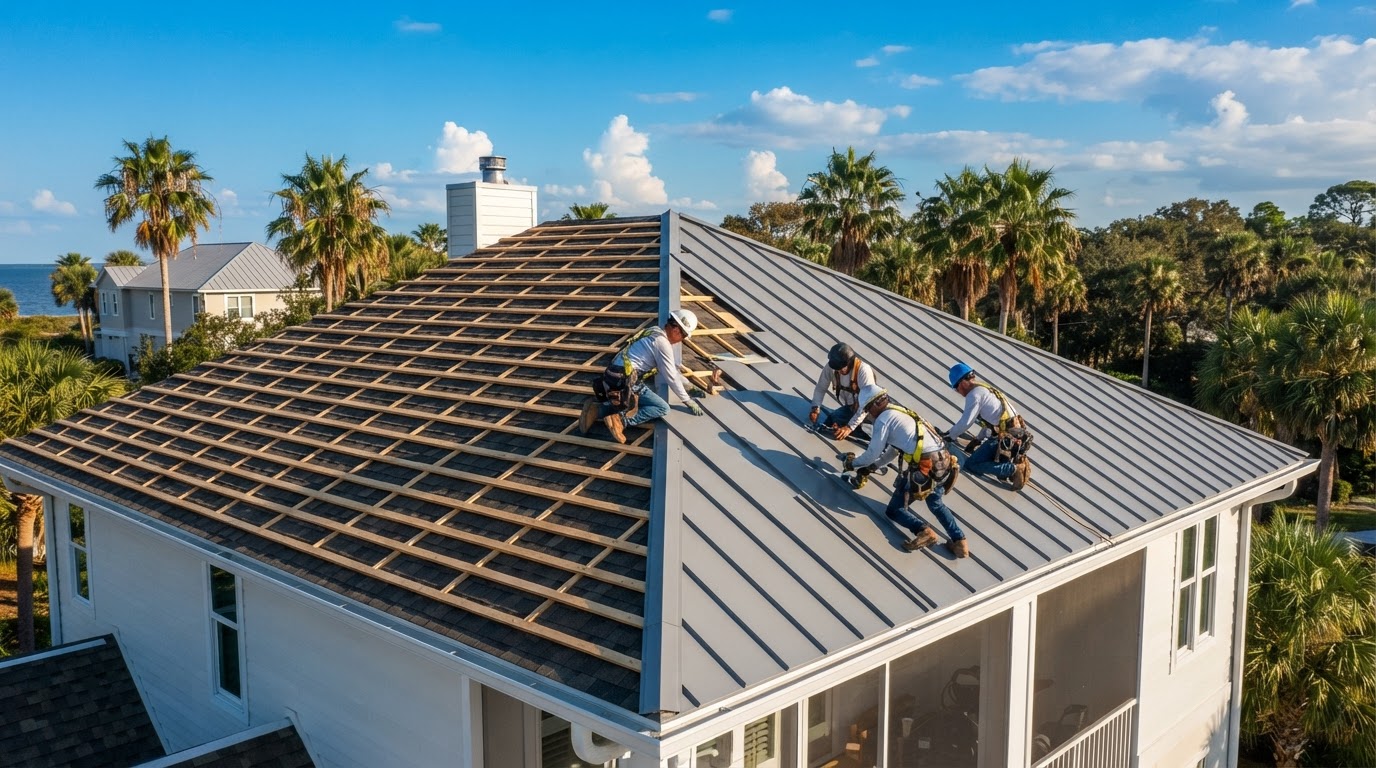
There are several ways a metal roof-over can be assembled, and the method changes the performance of the finished system. A direct-to-deck installation fastens panels straight to the prepared roof surface. An approved overlay may use an engineered underlayment over the flattened shingles. A batten or purlin-style assembly raises the metal off the shingles on vertical framing, which can improve ventilation and create a drainage plane. None of these is universally correct; the right approach is dictated by the panel system, the deck, and the governing code.
We never state that one installation method is universally correct. A batten system is not automatically better than a direct-to-deck install, and a roof-over is not automatically cheaper than a tear-off once deck repairs and code upgrades costs are included. The honest answer comes only after an on-roof inspection.
When Shingles Should Be Removed First
Covering a failing roof with metal does not fix the failure; it hides it. On a large share of the Pensacola homes we inspect, a tear-off down to the deck is the responsible path because the existing conditions would compromise the new system from underneath. Recognizing these red flags before a metal roof-over is attempted protects the long-term investment in the new roof.
- Rotten or delaminating decking that would flex and fail beneath a new metal panel
- Active leaks indicating water is already reaching the deck or interior
- Trapped moisture between shingle layers that can blister, condense, or accelerate deck rot
- Multiple existing layers—Florida code generally prohibits a third roof layer
- Severe curling or buckling that prevents a flat, contact-worthy substrate for metal
- Soft or spongy decking felt during a walk-through inspection
- Flashing failures at valleys, walls, or penetrations that cannot be corrected from above
- Unknown substrate condition—older homes where the deck material and fastening history are uncertain
Connected inspections and repairs
Metal System Options for Roof-Over Projects
Not every metal profile is equally suited to a roof-over. The attachment method and the way the panel interacts with an uneven shingle surface determine whether an overlay is viable. Below is how the common systems behave over an existing shingle layer, each linked to its dedicated page for full detail.
Standing Seam
Concealed-fastener panels usually installed over battens or a prepared deck. Clean appearance and low exposed-penetration maintenance, but the premium option for a roof-over.
Explore Standing Seam5V Crimp
Classic Florida exposed-fastener profile that can attach to battens or a flattened, code-compliant surface. A common and more accessible roof-over choice.
Explore 5V CrimpExposed-Fastener Panels
R-panel and corrugated profiles often used on simpler geometries and outbuildings where economy and speed matter most.
Explore R-PanelMetal Shingles
Interlocking individual shingles that can offer a more traditional appearance while still being installed over an approved substrate.
Explore Metal ShinglesStone-Coated Steel
Steel panels with textured granule finishes in tile, shake, or shingle profiles; attachment method follows manufacturer roof-over requirements.
Explore Stone-Coated SteelAttachment method and substrate preparation matter more in a roof-over than in a tear-off replacement because the metal is interacting with a surface that is not perfectly flat. How the panels are fastened, whether battens are used, and how underlayment is layered all determine whether the assembly handles wind uplift and sheds water as designed.
Pensacola Climate & Roof-Over Installation Details
The western Florida Panhandle adds a layer of complexity to any roof-over. A metal system sitting above an existing shingle layer must manage the same Gulf Coast threats as a tear-off replacement—high wind, wind-driven rain, humidity, UV, and salt air nearer the coast—but it must also handle the moisture and ventilation dynamics of an assembly with two material layers.
- High wind: clip spacing, edge fastening, and panel gauge engineered for uplift over the existing surface
- Wind-driven rain: sealed side laps and end-lap detailing that resist water driven beneath flashings
- Gulf humidity: underlayment choice that prevents hidden condensation between the shingle and metal layers
- Condensation management: ventilation or a proper drainage plane so moisture is not trapped against the deck
- Ventilation: balanced ridge and soffit flow to relieve attic heat and moisture load
- Salt exposure nearer the coast: substrate and coating selected by proximity to open water
- Fastener selection: marine-grade screws and gaskets matched to the panel and environment
- Flashing: step, counter, and edge flashing detailed to channel water away from penetrations and transitions
- Underlayment: synthetic or self-adhering peel-and-stick as a secondary water barrier over the shingles
- Eaves, rakes, and ridges: trimmed and sealed to keep wind-driven rain out at the roof edges
Condensation is the single most underestimated risk in a metal roof-over. If warm, humid Pensacola air is trapped between the shingles and the metal without a drainage plane or ventilation, moisture can collect on the underside of the panels and reach the deck. A proper roof-over is engineered to manage that moisture, not simply laid over shingles and fastened down.
The Metal Roof-Over Evaluation Process
Because a roof-over is only appropriate for certain homes, our process starts with a thorough inspection rather than a quote. We need to know what is under the shingles before we can responsibly recommend an overlay. This is the sequence we follow for a Pensacola metal roof-over evaluation.
- 1Existing roof inspection — count layers, check adhesion, and flag curling, blistering, or moisture
- 2Deck evaluation — walk the roof to find soft spots and verify sheathing integrity beneath the shingles
- 3Leak and moisture check — identify any active leaks that would require tear-off rather than overlay
- 4Code and manufacturer verification — confirm the proposed overlay meets current Florida Building Code and the panel system's installation requirements
- 5Roof geometry review — assess pitch, valleys, and penetrations that affect overlay feasibility
- 6Substrate preparation plan — determine whether flattening, battens, or direct-to-deck attachment applies
- 7Written scope and estimate — itemize materials, underlayment, flashing, permits, and labor for the overlay path
- 8Permit and installation — pull the required Escambia or Santa Rosa County permit and install to the agreed scope
Frequently Asked Questions
Wondering If a Metal Roof-Over Works for Your Pensacola Home?
Contact Pensacola Metal & Shingle Roofing Contractors for a detailed written estimate across Pensacola, Escambia County, and Santa Rosa County.
Request Your Roofing Estimate
Direct consultation for Pensacola & Escambia County residential and coastal properties.