
Roof Underlayment Replacement Pensacola
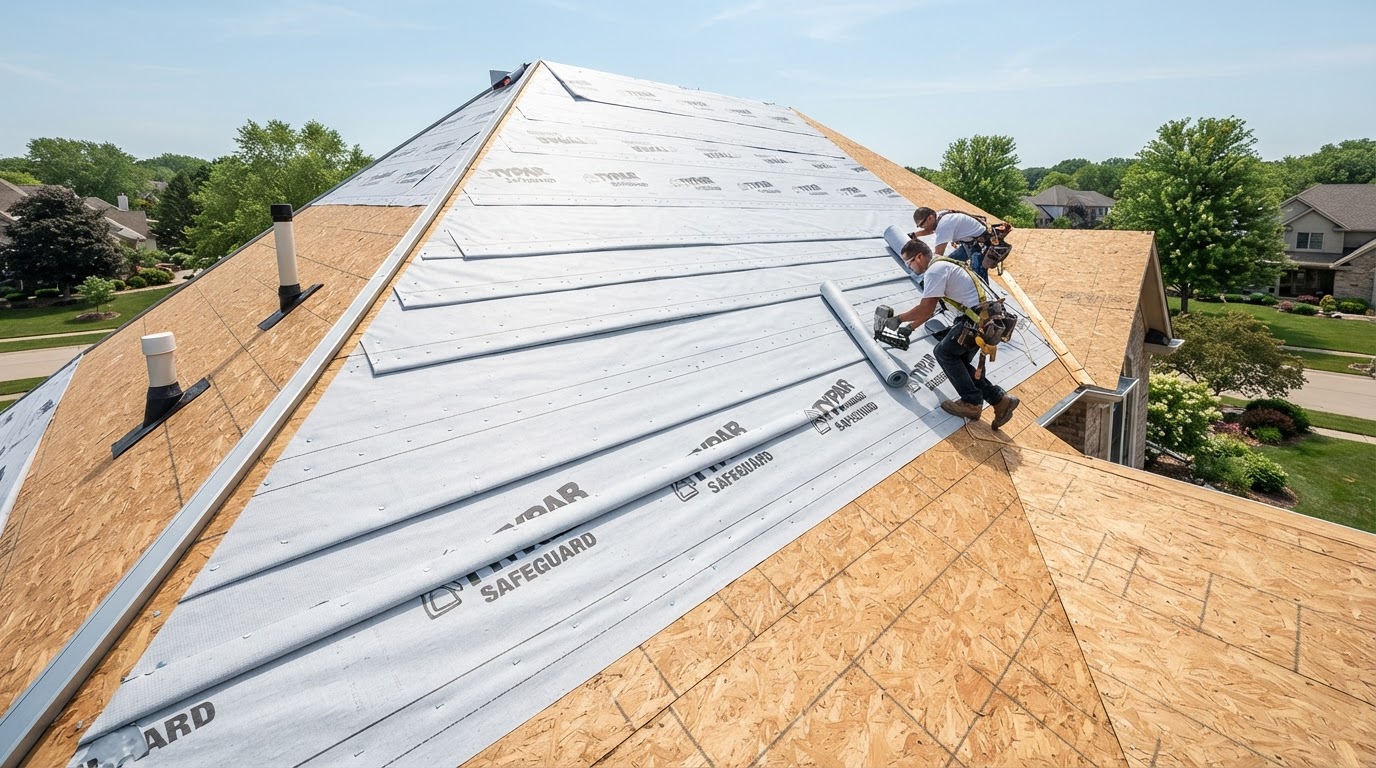
Roof underlayment is the protective layer installed between the roof deck and the shingles or metal panels above it. It is the secondary moisture-control layer of the roof assembly—the backup that protects the deck when the primary roof covering is compromised by wind, impact, or aging. In Pensacola's wind-driven rain and hurricane exposure, the underlayment beneath your roof matters as much as the visible surface. We replace and upgrade underlayment as part of reroofing and roof-system conversion projects across Escambia County.
Roof underlayment replacement removes the old moisture barrier beneath a roofing system and installs new underlayment—typically synthetic underlayment or a self-adhered peel-and-stick membrane. Underlayment serves as a secondary water-control layer that protects the deck when the primary roof covering is damaged or compromised. It is generally replaced as part of a larger roofing project rather than as a surface repair, because accessing it requires removing the shingles or metal roofing above it.
Types of Roof Underlayment
Not all underlayment is the same, and the right choice depends on the roof system, the exposure, and the installation requirements. The three common categories differ in how they attach, how they resist water, and where they fit within a roof assembly. Understanding the differences helps explain why a Gulf Coast roof may specify a different underlayment than a roof in a milder climate.
- Synthetic underlayment—a lightweight, high-strength moisture barrier made from woven polypropylene or similar material, fastened to the deck with caps or nails and offering strong water resistance and tear strength
- Self-adhered peel-and-stick membrane—a membrane that bonds directly to the deck to create a sealed, water-tight layer, often used in valleys, eaves, and other vulnerable areas where wind-driven rain is a concern
- Traditional felt—an older asphalt-saturated underlayment commonly used as a baseline comparison, less water-resistant and less durable than modern synthetic and self-adhered alternatives
These materials differ in attachment, water resistance, and application. Synthetic underlayment is fastened mechanically and relies on its material strength and water-shedding ability. Peel-and-stick membrane bonds to the deck for a sealed layer that resists water even if the primary covering is breached. Traditional felt is an older comparison point that newer materials have largely surpassed in performance. The right specification depends on the roof system and the exposure—not every project requires the same underlayment everywhere.
We do not claim that one underlayment material is automatically required on every roof. The appropriate specification depends on the roof system, the building code, the manufacturer's requirements, and the specific exposure of the property. We evaluate these factors rather than applying a single default.
When Underlayment Needs Replacement
Underlayment is part of the roof assembly, not a surface layer that can be patched in isolation. Accessing it requires removing the shingles or metal panels above it, which is why underlayment replacement is almost always performed as part of a larger roofing project rather than a standalone repair. The most common triggers are full roof replacement, damage to the existing underlayment, and roof-system conversions.
- Full roof replacement—new underlayment installed as part of any complete reroof
- Damaged existing underlayment—a compromised barrier that must be replaced to protect the deck
- Water intrusion—underlayment that has failed and allowed moisture to reach the deck
- Storm damage—wind, debris, or impact that compromised the underlayment
- Deck repair—underlayment removed to access and replace damaged sheathing
- Roof-system conversion—switching from shingles to metal or between metal systems
- Old roofing tear-off—underlayment removed with the old roof and replaced with new
Because underlayment sits beneath the visible roof covering, treating it like a surface repair is not practical. If the underlayment is compromised, the roof covering above it must be removed to replace it. This is why underlayment is addressed as part of reroofing, deck repair, and system conversion work rather than as an isolated fix.
Secondary Water Protection for Gulf Coast Roofs
On the Gulf Coast, underlayment does more than provide a clean surface for shingles. It is the layer that protects the deck when the primary roof covering is compromised by wind, impact, or storm damage. During a hurricane, shingles can be lifted or torn away and metal panels can be damaged; the underlayment beneath is what keeps water off the deck until the roof covering is repaired. This is why underlayment selection is a storm-readiness decision, not just a construction detail.
- Wind-driven rain—water forced beneath the roof covering that the underlayment must shed
- Roof covering damage during storms—shingles or panels lost to wind expose the underlayment
- Vulnerable roof transitions—valleys, eaves, and hips where water concentrates
- Valleys—the intersections where two roof planes meet and channel large volumes of water
- Eaves—the lower roof edges exposed to wind uplift and water backup
- Penetrations—vents, pipes, and chimneys where underlayment supplements flashing
- Self-adhered systems—peel-and-stick membranes that bond to the deck for sealed protection
Related storm and water-protection resources
We do not promise that any underlayment system qualifies for insurance discounts or MSFH grant assistance. Eligibility for those programs depends on the specific product, the installation, the program requirements, and the homeowner's policy. We specify underlayment based on the roof system and exposure, and we can help you understand what documentation may be relevant to a mitigation inspection.
Underlayment With Shingle & Metal Roofs
Underlayment must be compatible with the roofing system above it. Shingles and different metal roofing systems interact with underlayment differently, and using an incompatible underlayment can affect performance or even void a manufacturer's warranty. We specify underlayment based on the roof system being installed, not as a one-size-fits-all choice.
- Asphalt shingles—synthetic or self-adhered underlayment compatible with the shingle system
- Standing seam—a high-temperature underlayment suited to concealed-fastener metal systems
- 5V crimp—an underlayment appropriate for exposed-fastener metal panel installation
- Metal roof conversions—underlayment specified for the transition from shingles to metal
- Stone-coated steel—an underlayment compatible with the manufacturer's installation requirements
- Metal shingles—an underlayment suited to the metal shingle system and its attachment
Roofing systems we install underlayment beneath
Where Underlayment Fits in the Roof Assembly
Underlayment is one layer within a complete roof assembly that includes the deck, the underlayment, the flashing, the roof covering, and the ventilation. Each layer depends on the others. A high-quality underlayment over a rotten deck still fails. A sound deck with the wrong underlayment for the roof system still underperforms. Understanding underlayment as one component—not a standalone solution—explains why it is always specified as part of the larger system.
During a reroofing project, the assembly is installed in order: the deck is prepared and any damaged sections replaced, the underlayment is installed as the moisture barrier, flashing is detailed at penetrations and transitions, the roof covering is installed, and ventilation is verified. Each step builds on the one before it, and the underlayment is the layer that ties the deck to the covering.
- Deck—a solid, sound surface for the underlayment and roof covering to fasten to
- Underlayment—the moisture barrier that protects the deck beneath the covering
- Flashing—the watertight details at penetrations, valleys, and transitions
- Roof covering—the shingles or metal panels that shed water and resist wind
- Ventilation—the attic airflow that manages heat and moisture under the deck
Frequently Asked Questions
Evaluating Underlayment for Your Pensacola Roof System?
Contact Pensacola Metal & Shingle Roofing Contractors for a detailed written estimate across Pensacola, Escambia County, and Santa Rosa County.
Request Your Roofing Estimate
Direct consultation for Pensacola & Escambia County residential and coastal properties.