
Roof Valley Repair Pensacola
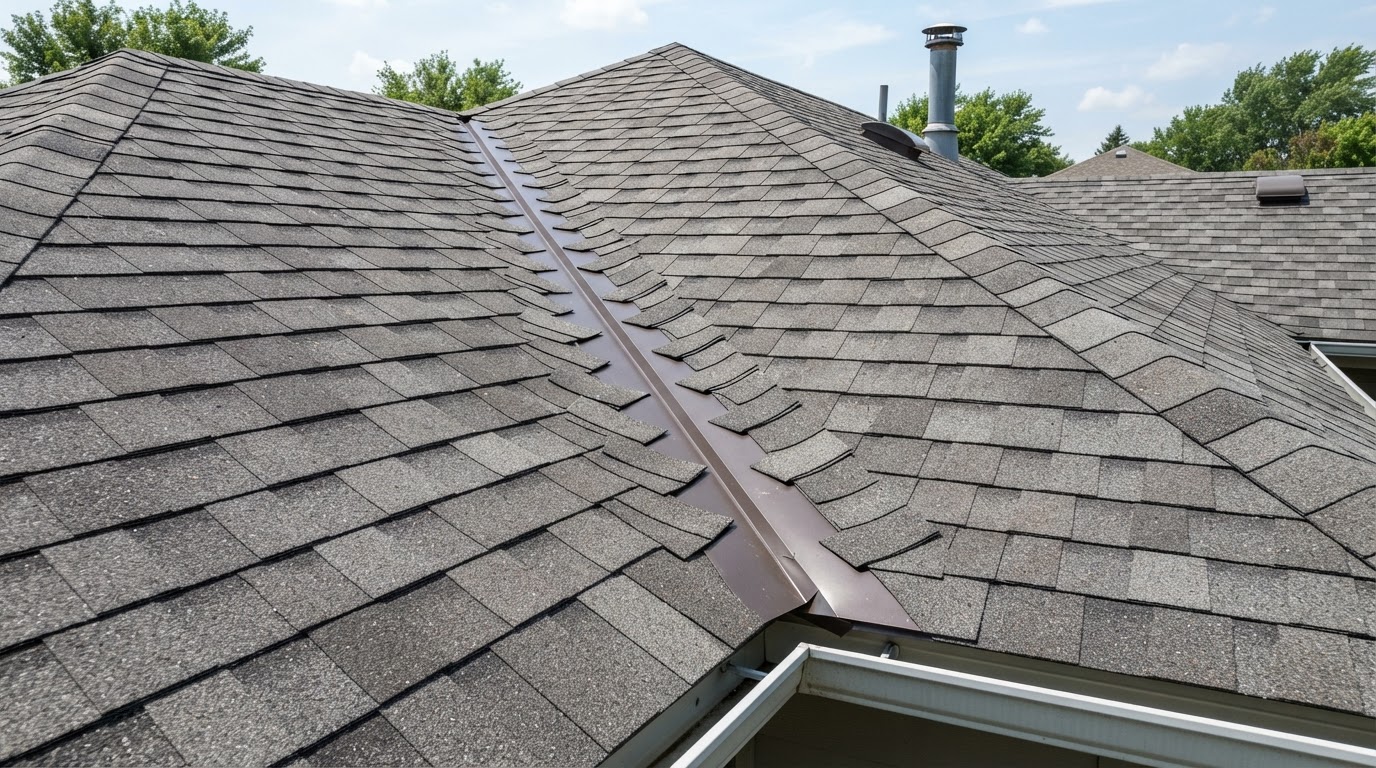
A roof valley is the intersection where two roof planes meet and channel rainwater down the roof. Because valleys concentrate large volumes of water, they are one of the most common leak points on a shingle roof—and one of the most damaging when they fail. In Pensacola's heavy rainfall and tropical storms, a valley that leaks can move serious water into the home fast. We repair and reconstruct roof valleys across Pensacola and Escambia County, diagnosing the actual failure before any patching begins.
Roof valley repair fixes leaks and deterioration at the intersection where two roof planes meet and channel rainwater. Valleys fail when shingles, underlayment, flashing, or installation details in the valley degrade, allowing water to penetrate beneath the roof covering. Because valleys concentrate large volumes of water, a failure there can develop quickly and cause significant interior damage. Diagnosis matters before surface patching, because the visible leak is often not the actual source of the water intrusion.
Signs of a Failing Roof Valley
A failing roof valley usually announces itself through water intrusion, but the visible symptoms vary. Because the valley channels so much water, even a small breach can move significant moisture into the home during a single storm. Recognizing the signs early—before a heavy rain event—keeps a repairable valley problem from becoming interior water damage.
- Ceiling stains—discoloration appearing below a valley, often the first interior sign
- Water intrusion after heavy rain—leaks that appear specifically during intense rainfall
- Missing valley shingles—shingles torn or washed away from the valley channel
- Cracked shingles—splits in the shingles running through the valley
- Exposed underlayment—the moisture barrier visible where shingles have failed
- Debris accumulation—leaves and branches collecting in the valley and blocking drainage
- Rusted metal flashing—corrosion on metal valley flashing where used
- Granule loss—shingles in the valley shedding granules from concentrated water flow
- Damaged seal areas—failed sealant or seal strips that no longer shed water
Not every ceiling stain below a valley means the valley itself is leaking—water can travel along rafters or underlayment before appearing inside. But a stain below a valley intersection is a strong signal that the valley and its flashing deserve a close inspection.
Common Causes of Valley Leaks
Valley leaks develop from a mix of aging, installation, and storm factors. The valley is a high-stress area: it channels the most water, its flashing and shingles endure concentrated flow, and any weak point is exploited every time it rains. Understanding the cause determines whether a repair will hold or whether the valley needs reconstruction.
- Aging shingles—shingles in the valley losing flexibility and cracking under water flow
- Improper installation—valley shingles or flashing installed incorrectly from the start
- Damaged underlayment—the moisture barrier beneath the valley compromised
- Storm damage—wind, debris, and heavy rain that damage valley shingles and flashing
- Debris—leaves and branches that collect in the valley and block drainage
- Poor drainage—a valley that does not shed water freely, causing backup and intrusion
- Flashing deterioration—metal valley flashing that has corroded or pulled loose
- Fasteners in vulnerable locations—nails placed in the water channel rather than off to the side
- Previous patching—repairs that sealed the surface without addressing the underlying failure
Related leak and inspection services
Valley Repair vs Valley Replacement
Valley work ranges from an isolated shingle repair to a full valley reconstruction, and the right scope depends on what the diagnosis finds. A surface patch over a valley leak is the most common reason a valley repair fails—because it seals the visible symptom without addressing the failed underlayment, flashing, or installation beneath. Diagnosis before patching is what separates a valley repair that holds from one that leaks again the next storm.
- Isolated shingle repair—replacing a few damaged valley shingles when the underlayment and flashing are sound
- Valley reconstruction—removing the valley shingles, repairing or replacing the underlayment and flashing, and reinstalling the valley
- Underlayment replacement—renewing the moisture barrier beneath the valley where it has failed
- Flashing repair—repairing or replacing metal valley flashing where it has corroded or pulled loose
- Partial reroofing—when valley damage is part of broader roof deterioration, extending the scope to the affected roof section
The decision between these scopes is driven by the inspection. If the valley shingles are damaged but the layers beneath are sound, an isolated repair may hold. If the underlayment or flashing has failed, a surface patch will not last, and valley reconstruction is the more durable fix. We diagnose before we recommend, so the repair addresses the actual failure.
We do not patch a valley leak without diagnosing its source. A sealant application over a leaking valley may stop water temporarily, but if the failure is in the underlayment or flashing beneath, the leak will return—and the delay can allow water to reach the deck. Diagnosis first, then the appropriate scope of repair.
Heavy Rain Conditions Near Pensacola
Pensacola's rainfall puts extraordinary demand on roof valleys. Tropical systems and heavy thunderstorms can dump large volumes of water in a short time, and every gallon that lands on the roof concentrates in the valleys on its way down. A valley that performs fine in ordinary rain can be overwhelmed during a storm, which is why valley failures so often appear first after a major rain event.
- Intense rainfall—large volumes of water channeled through valleys in a short time
- Wind-driven rain—water forced beneath valley shingles and flashing
- Tropical systems—sustained heavy rain that tests valley drainage for hours
- Debris from trees—leaves and branches that collect in and block valleys
- Repeated wetting—valleys that stay damp between storms, accelerating shingle aging
- Valley drainage demands—the concentrated water flow that makes valleys a high-stress area
We reference Pensacola and Escambia County naturally because the rainfall here genuinely shapes the valley problems we see. A valley in a drier climate ages differently than one exposed to Gulf Coast storms, and the repair history reflects that difference. Understanding the local rain exposure explains why valley repairs are so common here and why a valley that held for years can suddenly fail after one major storm.
Keeping Valleys Clear & Functional
Some valley failures are preventable with routine attention. Debris is the most common accelerant of valley deterioration—leaves and branches that collect in the valley block drainage, trap moisture against the shingles, and speed up aging. Keeping valleys clear, especially before hurricane season, reduces the risk that a storm will exploit a blocked or weakened valley.
- Keep valleys clear of leaves and branches that block drainage
- Inspect valleys before hurricane season and after major storms
- Watch for shingle damage or exposed underlayment in the valley
- Address ceiling stains below a valley promptly rather than waiting
- Avoid letting debris accumulate and trap moisture against the shingles
Maintenance cannot prevent every valley failure—an aging or improperly installed valley will eventually leak regardless of how clean it is kept. But routine attention reduces preventable causes and gives you early warning before a small valley problem becomes interior water damage.
Connected services
Frequently Asked Questions
Have a Leaking or Damaged Roof Valley in Pensacola?
Contact Pensacola Metal & Shingle Roofing Contractors for a detailed written estimate across Pensacola, Escambia County, and Santa Rosa County.
Request Your Roofing Estimate
Direct consultation for Pensacola & Escambia County residential and coastal properties.