Soffit, Fascia & Drip Edge Repair Pensacola
Soffit, fascia, and drip edge form the transition between the roof covering, the roof deck, attic ventilation, and the exterior walls. These components sit at the roof perimeter where wind and water hit hardest, and damage here can allow water, wind, and pests into the roof-edge assembly. We repair and replace damaged soffit, fascia, and drip edge across Pensacola, Escambia County, and the western Florida Panhandle as part of roofing work.
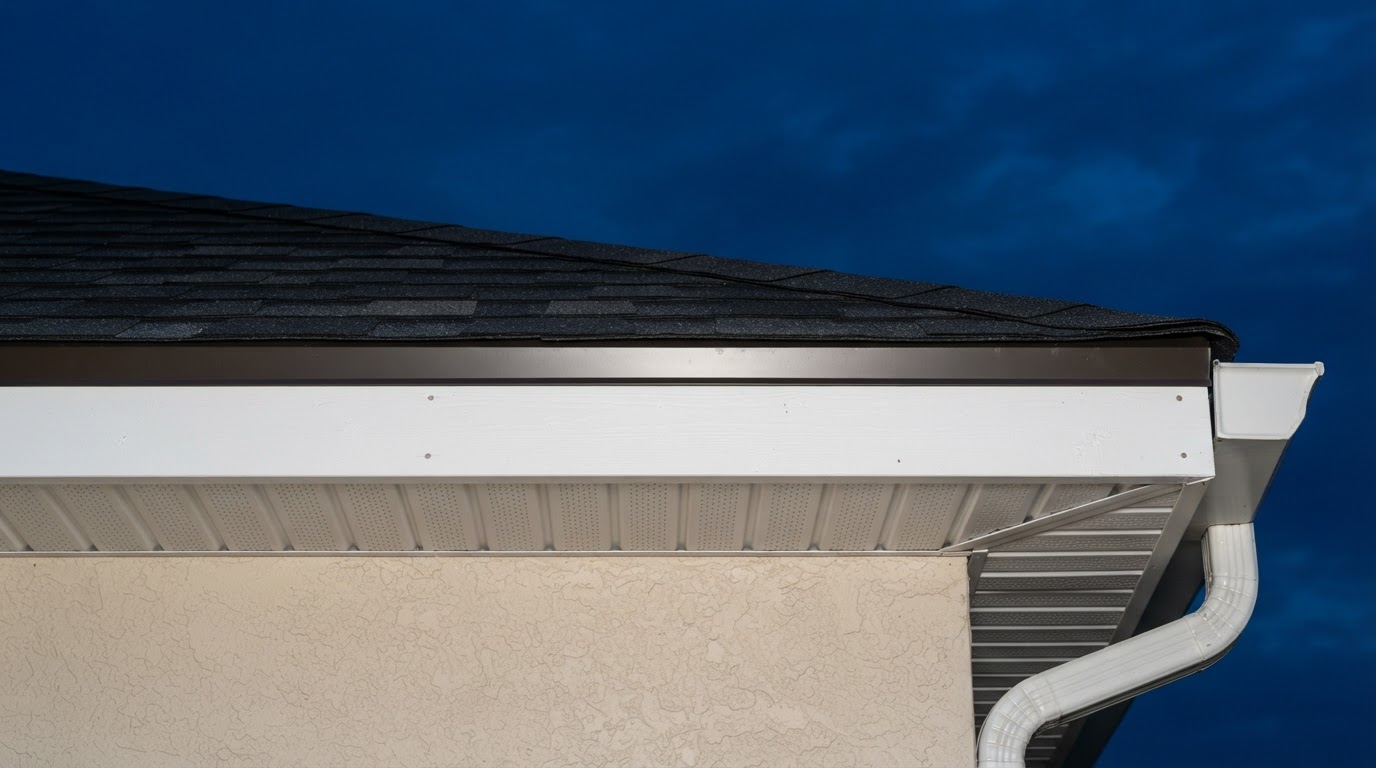
Soffit, fascia, and drip edge form an important transition between the roof covering, roof deck, attic ventilation, and exterior walls. Damage to these areas can allow water, wind, and pests into vulnerable roof-edge assemblies and may indicate a larger roofing problem. The soffit protects the underside of the overhang, the fascia caps the rafter ends and carries the gutters, and the drip edge directs runoff away from the deck edge—all three must remain intact for the roof perimeter to shed water correctly.
What Soffit, Fascia & Drip Edge Do
The roof edge is more than where the shingles or metal panels end. It is a working assembly of three components that protect the rafter ends, the deck edge, and the attic. When any one fails, the other two become more vulnerable, and water that the roof surface sheds correctly can still reach the wood beneath.
Soffit
The underside of the roof overhang. Vented soffit allows intake air into the attic ventilation system, and it protects the roof-edge assembly from moisture, pests, and wind. Damage here affects ventilation and can let pests reach the attic.
Fascia
The vertical board capping the rafter ends at the roof edge. The fascia carries the gutters and protects the rafter ends from water. Rotting or peeling fascia often signals moisture traveling behind the gutter or down the roof edge.
Drip Edge
Metal flashing installed along the roof perimeter that directs runoff away from the fascia and deck edge. Bent, loose, or missing drip edge lets water reach the deck edge and fascia, causing rot that starts hidden.
These three components work together. A loose drip edge lets water reach the fascia; a rotting fascia exposes the rafter ends; a damaged soffit disrupts intake ventilation. Repairing one while ignoring the others leaves the roof edge vulnerable to the next storm.
Common Damage & Warning Signs
Roof-edge damage has recognizable warning signs, and most of them are visible from the ground or from the attic. Because the edge sits at the roof perimeter, it is the first part to fail under wind uplift and the first to show water staining when drainage goes wrong.
- Rotting wood along the fascia or rafter ends exposed to moisture over time
- Peeling, warped, or splitting fascia boards that have absorbed water repeatedly
- Loose or sagging soffit sections that have pulled away from the overhang
- Missing soffit panels that leave the underside of the overhang exposed
- Bent, loose, or missing drip edge flashing along the roof perimeter
- Water staining or dark streaks running down the fascia behind the gutters
- Gutter-related deterioration where water has overflowed or run behind the gutter
- Pest entry points where damaged soffit or fascia has opened access to the attic
- Roof-edge leaks that appear indoors near exterior walls or ceilings
- Wind damage along eaves and rakes after a tropical storm or hurricane
Fascia deterioration may originate from a roofing, gutter, or flashing problem higher in the assembly—not just the fascia itself. Water running behind the gutter, a loose drip edge, or a roof leak at the eave can all rot the fascia from above. Replacing the fascia without correcting the source of the moisture will rot it again.
Why Roof Edges Matter During Pensacola Storms
The roof edge is the most wind-exposed part of the house. During Pensacola's tropical storms and hurricanes, wind hits the eaves and rakes first, creating uplift pressure that tests the attachment of shingles, drip edge, soffit, and fascia. Edge damage after a storm is not merely cosmetic—it is where water and wind enter the assembly.
- High winds create uplift pressure concentrated at the eaves and rakes
- Wind-driven rain forced beneath loose drip edge and lifted shingle tabs
- Tropical storms that test the full roof perimeter at once
- Roof-edge uplift exposure on gable ends, rakes, and overhangs
- Heavy rainfall that overwhelms gutters and sends water over the fascia
- Gulf humidity that keeps wood components damp between storms
- Repeated wetting and drying that accelerates fascia and rafter rot
- Salt exposure nearer coastal areas like Pensacola Beach and Perdido Key
Damage at the eaves and rakes should not be dismissed as cosmetic. A bent drip edge or rotting fascia is a point where the next storm will push wind and water into the roof deck and attic. Along the western Florida Panhandle, where tropical systems arrive most years, keeping the roof edge intact is part of keeping the whole roof intact.
Related storm and roofing services
Repair Process & Related Roofing Problems
Repairing the roof edge is not just replacing a board. The edge is where roofing, ventilation, drainage, and flashing all meet, so a proper repair traces the moisture to its source before replacing the damaged material. Skipping the diagnosis replaces rotting wood that will rot again.
- 1Inspect the soffit, fascia, and drip edge for visible damage, rot, and loose attachment
- 2Identify the moisture source—roof leak, gutter overflow, loose drip edge, or flashing failure
- 3Evaluate the adjacent shingles or metal roofing for edge-related damage
- 4Check the roof decking where accessible for rot or softness at the perimeter
- 5Remove compromised material—rotted fascia, damaged soffit, bent or missing drip edge
- 6Repair or replace affected components with material suited to the roof edge
- 7Correct related flashing or roofing issues that caused the edge damage
- 8Review drainage and ventilation interaction to prevent recurrence
Edge Repair vs Larger Roofing Work
Not every damaged fascia means the roof needs replacing. Most edge damage is a localized failure—rotted fascia, a bent drip edge, loose soffit—that can be repaired without reroofing. But edge damage can also be a symptom of a roof that has reached end-of-life or a leak that has been running behind the gutter for years. Knowing the difference requires understanding the roof's overall condition, not just the rot in front of you.
| Scope | When It Fits |
|---|---|
| Localized edge repair | Isolated fascia rot, one loose soffit section, or a bent drip edge on an otherwise sound roof |
| Edge repair + flashing | Drip edge or fascia damage tied to a flashing or gutter problem that must also be corrected |
| Partial reroof | Edge damage concentrated on one roof plane where the adjacent roofing is also failing |
| Full replacement | Widespread edge rot, recurring leaks, or a roof at end-of-life where isolated repair is no longer practical |
Drip edge and fascia can often be replaced without replacing the entire roof. The decision depends on the condition of the surrounding roofing material, the extent of any deck rot, and whether the moisture source has been corrected. A roof inspection determines which scope fits before any work begins.
Frequently Asked Questions
Roof-Edge Damage? Let's Protect the Perimeter in Pensacola.
Contact Pensacola Metal & Shingle Roofing Contractors for a detailed written estimate across Pensacola, Escambia County, and Santa Rosa County.
Request Your Roofing Estimate
Direct consultation for Pensacola & Escambia County residential and coastal properties.