Storm-Damaged Shingle to Metal Roof Replacement Pensacola
When a shingle roof needs major replacement after storm damage, the project is an opportunity—not just a repair. Instead of installing another shingle roof, many Pensacola homeowners compare standing seam, 5V crimp, metal shingles, and stone-coated steel as the replacement system. We help homeowners across Pensacola, Escambia County, and the western Florida Panhandle evaluate whether converting a storm-damaged shingle roof to metal fits their goals.
When a shingle roof requires major replacement after storm damage, homeowners may use the project as an opportunity to compare a new asphalt shingle system with standing seam, 5V crimp, or other appropriate metal roofing options. The decision to convert to metal should follow evaluation of the full roof assembly—the deck, underlayment, flashing, and existing roof age—not just the visible surface damage. A storm replacement is a chance to change roofing systems, but the right choice depends on the roof's condition, the owner's long-term goals, and Gulf Coast exposure.
First Determine the Extent of Storm Damage
Before choosing a replacement system, the storm damage has to be fully scoped. A shingle roof that looks like it needs a few replacements may have damage beneath—deck rot from water intrusion, failed underlayment, damaged flashing, or valley deterioration—that affects the replacement project. The conversion decision follows evaluation of the roof assembly, not just the shingles visible from the street.
- Missing and lifted shingles across the roof slopes
- Decking condition—rot, softness, or water damage beneath the shingles
- Underlayment condition—exposed, deteriorated, or storm-compromised
- Flashing integrity at penetrations, walls, and transitions
- Valley condition where two roof planes meet
- Roof penetrations—vents, pipes, skylights, and their flashing
- Ridge and hip damage from wind uplift at the peak
- Existing roof age and overall condition before the storm
The decision to convert to metal should follow evaluation of the roof assembly, not simply visible surface damage. A roof with significant deck rot, failed flashing, or widespread underlayment deterioration may need more preparation before any new system—shingle or metal—is installed. The scope of the project depends on what the inspection finds.
Metal Options After Shingle Roof Storm Damage
If the inspection supports a metal replacement, the next decision is which metal system fits the roof, the home, and the Gulf Coast exposure. Each system has different fastening, appearance, maintenance, and residential fit. The comparison below covers the options most relevant to a storm-damaged shingle roof replacement in Pensacola.
| Metal System | Fastener Type | Residential Fit | Coastal Considerations |
|---|---|---|---|
| Standing seam | Concealed fastener | Strong architectural appearance | Excellent with aluminum and proper coating near saltwater |
| 5V crimp | Exposed fastener | Traditional Florida residential profile | Good with proper fastener maintenance and coating selection |
| Metal shingles | Hidden/interlocking | Shake or slate appearance | Good for homeowners wanting metal with a traditional look |
| Stone-coated steel | Interlocking/fastener | Tile, shake, or shingle appearance | Metal substrate with textured finish for coastal exposure |
| R-panel | Exposed fastener | Better for barns and outbuildings | Typically not residential-primary but fits some applications |
Metal roofing system pages
Tear-Off, Deck Repair & New Roof Assembly
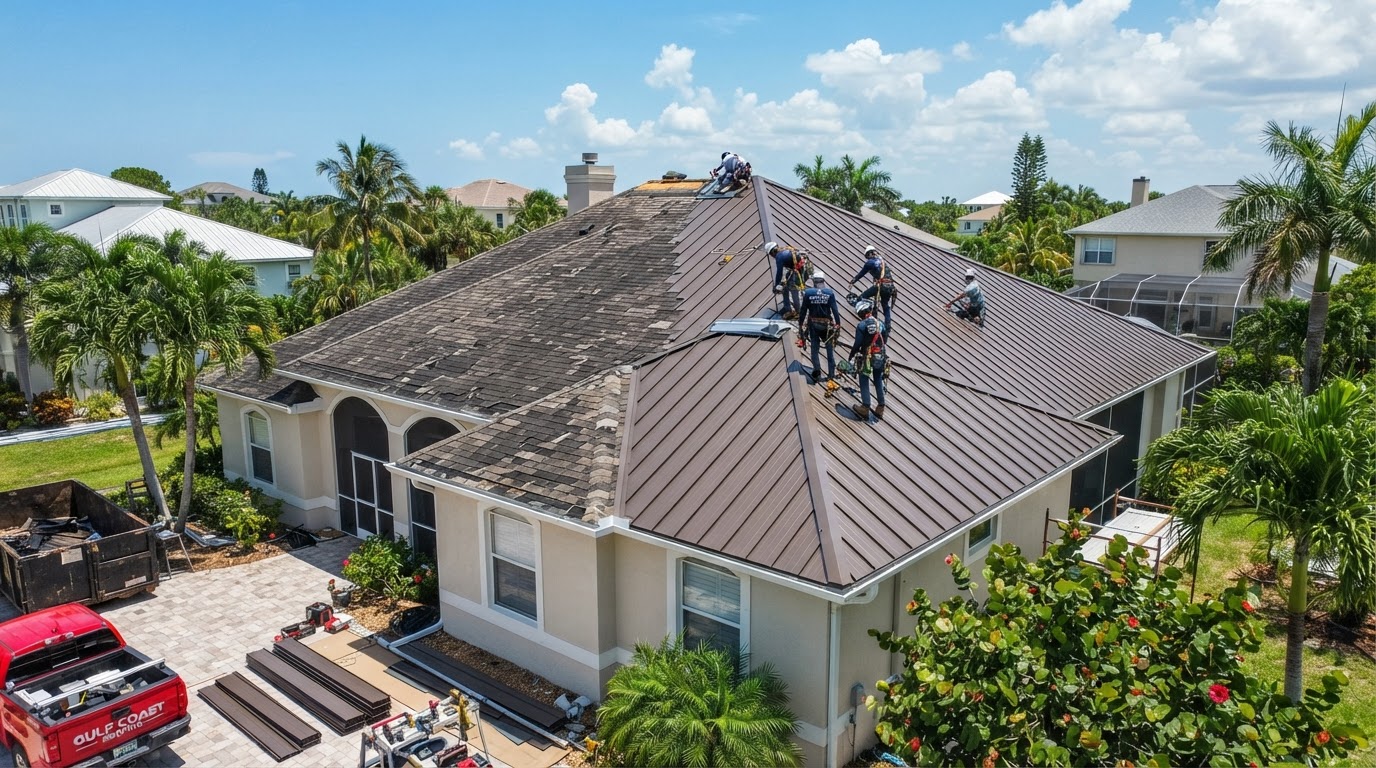
Converting a storm-damaged shingle roof to metal is a full roof assembly project, not just swapping one surface for another. The existing shingles typically come off, the deck is evaluated and repaired where storm water or age has damaged it, and a new underlayment and flashing system goes on before the metal roofing is installed. The assembly beneath the metal is what determines whether the new roof performs.
- 1Damaged shingle removal where required—full tear-off to expose the deck for evaluation
- 2Roof deck evaluation—inspect plywood or OSB for rot, softness, and storm water damage
- 3Plywood replacement where damaged—replace rotted or compromised deck sections
- 4Underlayment installation—synthetic or peel-and-stick membrane suited to the metal system and Gulf Coast exposure
- 5Flashing installation—new flashing at penetrations, walls, valleys, and edges integrated with the metal system
- 6Metal roofing system installation—standing seam, 5V crimp, or metal shingles installed to manufacturer and code requirements
- 7Ventilation—ridge, soffit, or other ventilation integrated with the new roof assembly
- 8Edge and ridge detailing—drip edge, ridge caps, and trim that complete the weather-tight assembly
Why Pensacola Homeowners Consider Metal After Storms
After a storm damages a shingle roof, some homeowners choose metal for the replacement because it fits their long-term ownership goals and the Gulf Coast exposure the roof faces every storm season. The reasoning is practical, not universal—metal is one option among several, and the right choice depends on the roof, the home, and the homeowner's plans for the property.
- Long-term ownership plans—a homeowner planning to stay may value a longer-service roofing system
- Gulf Coast exposure—recurring tropical weather that tests the roof every storm season
- Material options—standing seam, 5V crimp, metal shingles, and stone-coated steel each fit different homes
- Concealed vs exposed fastening—standing seam hides fasteners; 5V crimp and R-panel expose them
- Heat-reflective finishes—lighter colors and cool-roof coatings that reflect more solar energy
- Maintenance expectations—exposed-fastener systems need periodic fastener inspection; concealed systems less so
- Salt-air considerations—material and coating selection matters more near Pensacola Beach, Perdido Key, and Gulf Breeze
We never call metal roofing hurricane-proof. No roofing system is hurricane-proof. A properly specified and installed metal roof can offer strong wind performance, but performance depends on the product, the gauge, the fastening system, the underlayment, the flashing, and the installation—all of which must be matched to the roof and the exposure. Metal is a storm-resilient option, not a guarantee.
The decision to convert from shingles to metal after storm damage is a personal one that balances budget, appearance, maintenance, and long-term goals. What matters is that the choice follows a full inspection of the roof assembly and an honest comparison of the options—not an assumption that metal is automatically the right answer for every storm-damaged roof.
Storm Damage, Insurance & Upgrades
When storm damage leads to an insurance claim, the claim typically addresses the damage the storm caused. Upgrading to a different roofing system—replacing shingles with metal, or choosing a higher-end product—is a separate consideration from the storm repair itself. Homeowners should understand how these work separately before assuming a storm claim will cover an upgrade.
We do not promise that an insurer will pay for an upgrade, a replacement, a code item, or a metal roof. Coverage depends on the specific policy, the cause of loss, the adjuster's determination, the deductible, and applicable requirements. A storm claim may cover restoring the damaged roof to its pre-storm condition; any upgrade to a different system is typically a homeowner cost. Homeowners should confirm coverage and scope with their insurer before making decisions.
In some cases, homeowners choose to pay the difference between the insurance scope for the damaged roof and the cost of the metal system they want. That is a personal decision that depends on budget, goals, and the specifics of the claim. We provide the scope and pricing needed to make that decision, but we do not guarantee how any insurer will handle a given claim.
Storm and replacement resources
Frequently Asked Questions
Storm-Damaged Shingle Roof? Compare Metal Options in Pensacola.
Contact Pensacola Metal & Shingle Roofing Contractors for a detailed written estimate across Pensacola, Escambia County, and Santa Rosa County.
Request Your Roofing Estimate
Direct consultation for Pensacola & Escambia County residential and coastal properties.